Before my husband and I got married, I wanted to find a way to share that experience with him during the month leading up to our wedding. I chose thirty songs that had become part of our story together, wrote each title on a small piece of paper and placed them in a jar. Each day he drew one, listened to it and reflected on the memories it held for us. It became a quiet countdown to our wedding day, not marked by dates on a calendar, but by melodies that had shaped our relationship. Looking back, I realise that music has always been one of the ways I make sense of life and preserve its most meaningful moments.
Maybe it is no surprise, then, that so many cultures place music at the very heart of their creation stories. Across continents and throughout history, music is portrayed not simply as something that accompanies life, but as something that gives rise to it.
In Celtic mythology, creation begins with the Oran Mór, the Great Melody, a divine harmony from which all living things emerge. Indigenous Australian traditions speak of the Songlines, where ancestral beings sang the landscape into existence, their songs becoming both the creation of the land and the means of navigating it. In Japanese Shinto tradition, it is rhythm and dance that draw the Sun Goddess Amaterasu from her cave, restoring light to the world. Hindu mythology tells of Krishna, whose flute calls people away from the distractions of everyday life towards love, harmony and spiritual unity. Perhaps the most familiar is the Greek story of Orpheus, whose music was so beautiful that it softened even the hearts of the rulers of the Underworld.
Although these stories come from vastly different cultures, they share a common understanding: music possesses a unique power to unite, to heal, to transform and to awaken something deeply human within us.
This understanding continues within many religious traditions today. Whether through hymns, chants or sacred songs, music becomes a bridge between the earthly and the spiritual. It allows communities to breathe, sing and listen together, creating a shared experience that reaches beyond ordinary speech. It marks births, weddings and funerals, accompanies festivals and seasons, and helps give expression to feelings that are often difficult to put into words.
Interestingly, modern science is beginning to describe what these traditions have long understood intuitively. Researchers have found that music activates many different areas of the brain simultaneously, including those involved with memory, emotion and movement. Listening to music stimulates the release of dopamine, associated with pleasure and motivation, while also strengthening neural pathways that support learning and memory. Studies suggest that familiar instrumental music can improve concentration during complex tasks, while music heard before birth may even influence how newborn babies recognise speech patterns and familiar melodies.
While these discoveries are fascinating, maybe they simply affirm what humanity has known for centuries: music is woven deeply into our development and our experience of the world.
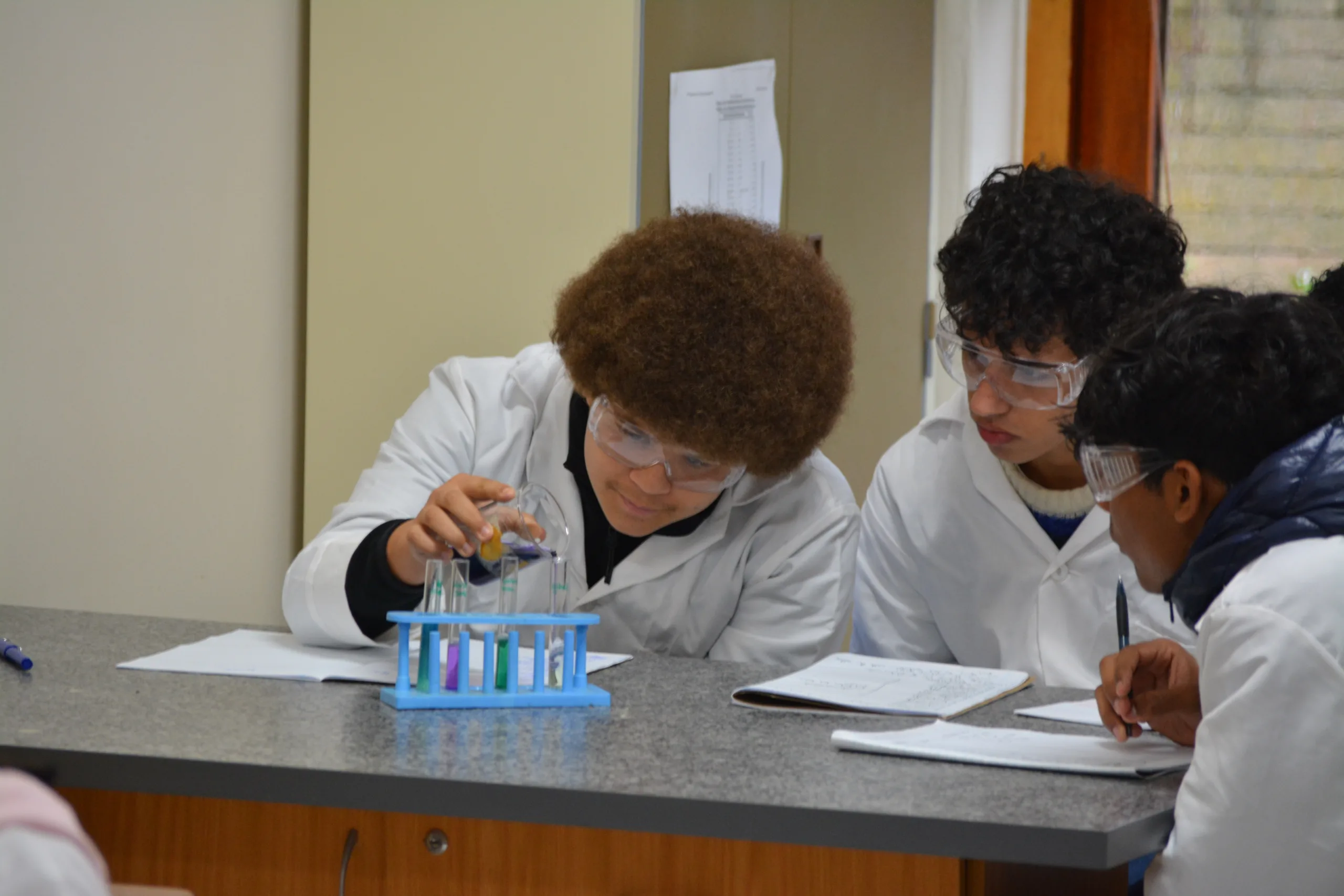
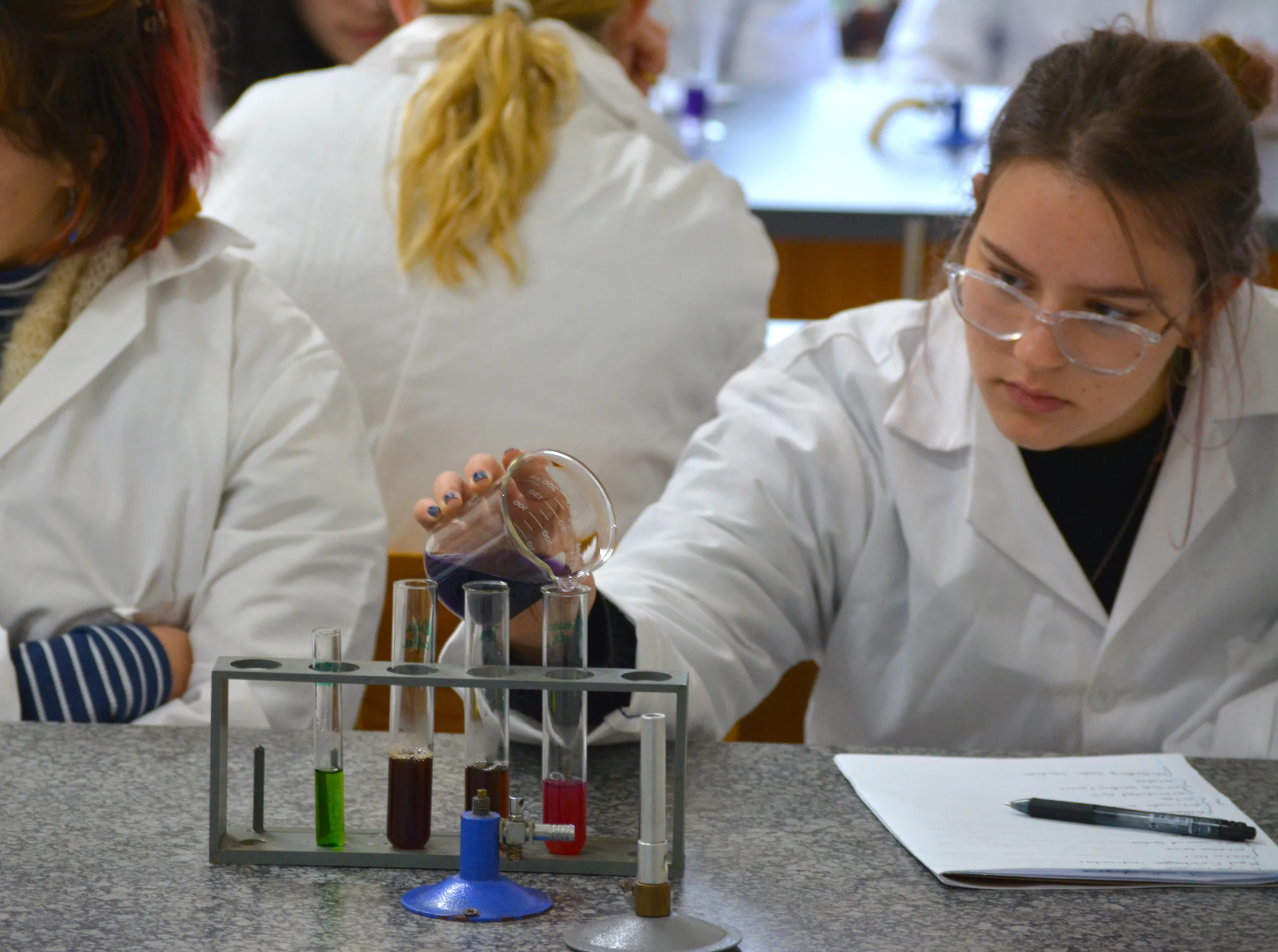
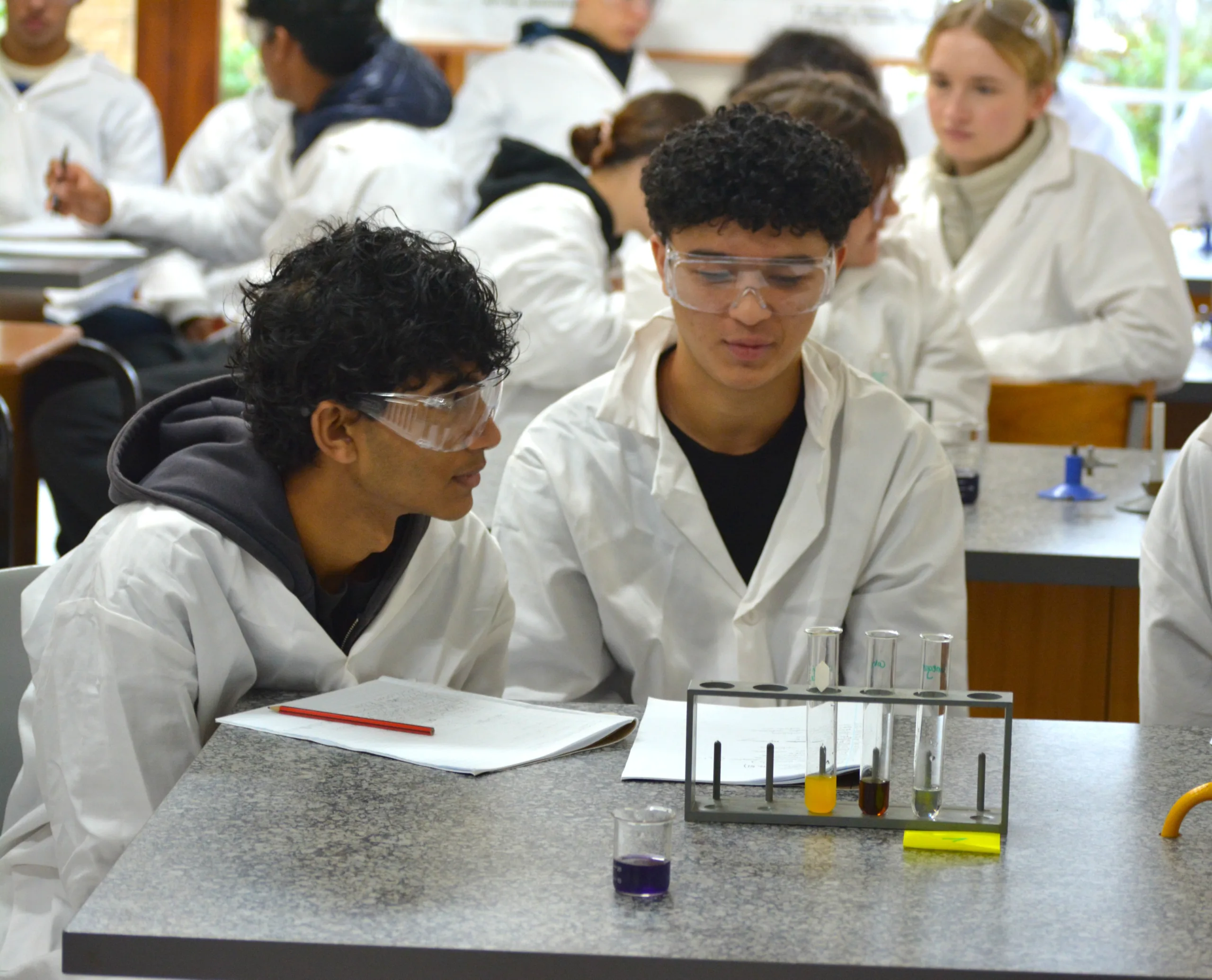
Perhaps this is why I was so excited to invite the Class 12 students to bring music into our Organic Chemistry Main Lesson. At first glance, chemistry and music seem worlds apart, yet both invite us to look for patterns, relationships and character. I was curious to see what would happen when students were encouraged to think about molecules not simply as chemical structures, but as something with rhythm, personality and story.
Students were invited to choose an organic molecule, research its history, discovery and chemical properties, and then pair it with a piece of music that best represented its character. Their chosen song needed to reflect the molecule through its rhythm, mood, lyrics, energy or movement, and they had to explain how these musical elements related to the molecule’s structure, function, physical properties or role in living systems. The challenge encouraged imaginative thinking while remaining firmly grounded in sound chemistry.
The results were thoughtful, creative and often surprisingly profound.
One student chose lactic acid, the molecule produced during anaerobic respiration, and connected it with Gas Gas Gas by Manuel. They explained how the song’s rapid build-up of energy mirrors the body’s ability to produce a quick burst of power without oxygen. Just as the song reaches an intense climax before fading, so too is anaerobic respiration a powerful but short-lived source of energy.
Another student explored capsaicin, the molecule responsible for the heat of chilli peppers, pairing it with The Devil Went Down to Georgia by The Charlie Daniels Band. The fiery energy of the fiddle duel and the growing intensity of the music beautifully reflected the burning sensation produced by capsaicin.
Several students chose neurotransmitters, with one linking serotonin to Good Days by SZA. They described how the song’s calm, dreamlike atmosphere reflects serotonin’s role in regulating mood and emotional balance, while its hopeful lyrics speak to our capacity to experience contentment and optimism.
One particularly memorable project connected the polymer cellulose with Tchaikovsky’s Waltz of the Flowers. The student observed that the repeating rhythmic patterns in the music echoed the repeating glucose units that form cellulose chains. They also compared the graceful movement of the piece to flowers dancing in a garden bending but not breaking due to the cellulose in their cell walls. Their most delightful insight, however, was that because cellulose forms the structure of wood, and many of the instruments in the orchestra are themselves made of wood, cellulose is, in a sense, playing the music.
Watching these projects unfold reminded me that some of the richest learning happens when students are invited to make meaningful connections between subjects that might at first seem unrelated. When learning engages both the intellect and the imagination, understanding becomes something much deeper than the memorisation of facts. Music became a bridge between science and creativity, inviting students to look beyond molecular structures and discover character, relationship and meaning.
Perhaps this is why so many creation stories begin with song. Music helps us recognise relationships that are otherwise invisible. It reminds us that the world is not simply something to be analysed, but something to be listened to. Whether in ancient myths, in places of worship, in scientific research, in a chemistry classroom or in the quiet gift of a song shared between friends, music continues to invite us into deeper connection, with one another, with the world around us and, possibly, with something greater than ourselves.
Angelique van Heerden
High School Teacher