13 to 19 years old
The Waldorf High School curriculum covers all the requirements of the South African school syllabus, but offers in addition a richer depth of learning. Our goal is to develop each student’s social, artistic, critical and creative abilities as much as the academic. Such a person, we believe, will be more widely prepared for life and for a contribution to society.
What is done in the High School is a natural continuation of the groundwork in the Kindergarten and Primary Schools. It represents the fruit of all the growth, nourishment and care fostered on the younger child. Waldorf Education is conceived of as a whole, as an organic process. The child’s living imagination, so carefully nurtured in the Primary School, grows organically into the realm of conceptual thought.
Themes that are handled in the Primary Main Lessons are recapitulated more consciously in the High School where the development of judgement and the challenges and changes of puberty and adolescence can be met with all the richness of the Waldorf approach.
The various aspects of the curriculum provide a stiff challenge to the individual student who has to display a larger measure of independence and originality of thinking than is normally the case at secondary school level. There is much project work in which individual research and creative presentation is required.
Students are continually encouraged to take their own initiatives in all their activities, to develop their own interest areas and to express the originality of their own discoveries and insights. Regular tests and reports form part of the continuous assessment of the progress of each student.
In these ways, self-confidence is nurtured as are social and communication skills. In addition, of course, the content of the Main Lessons is specifically designed to meet the needs of the growing personality.
13 to 14 years old
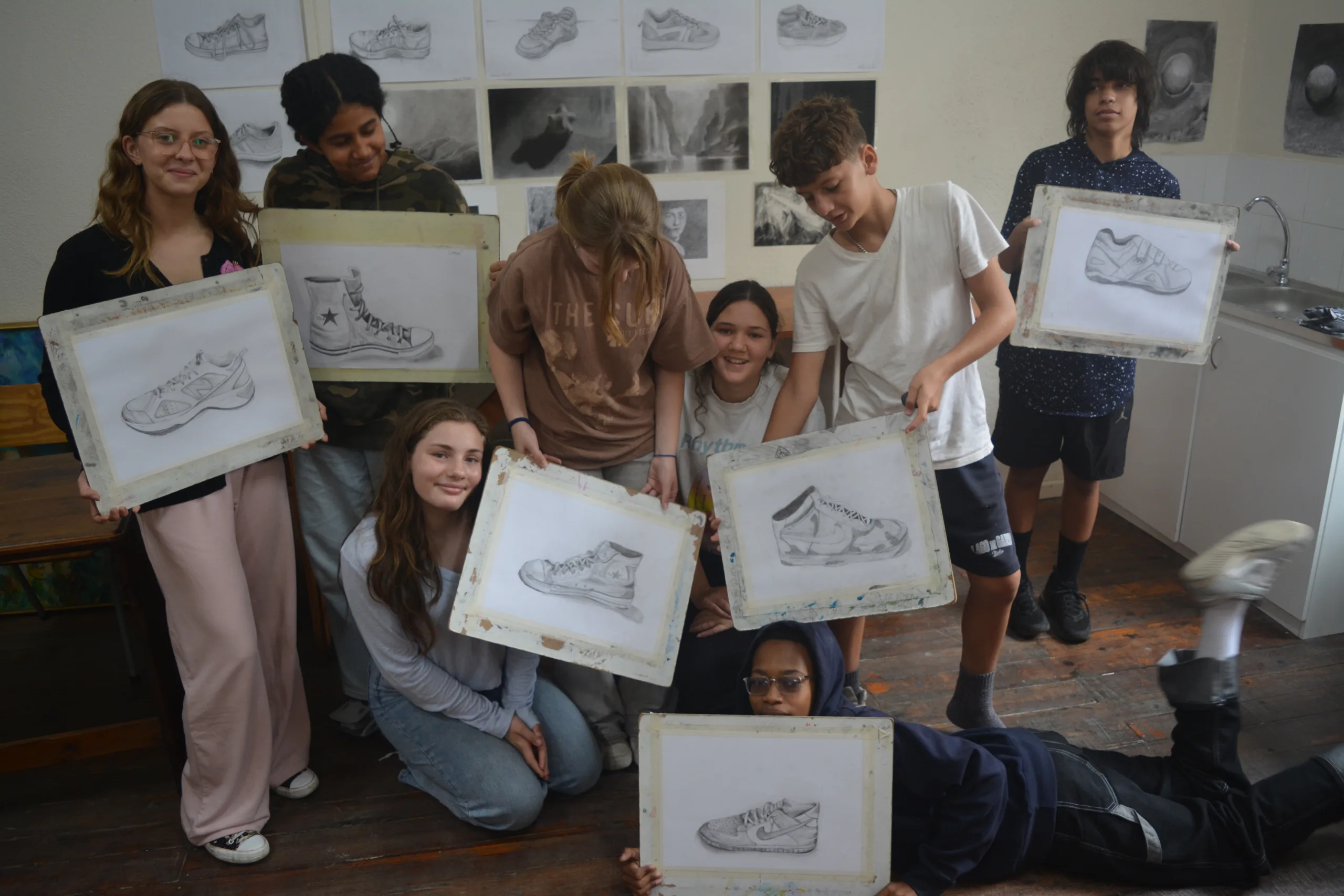
The pupils are into adolescence; bodily and psychological changes are well under way. The world of ideas begins to take on meaning for the young adolescent and the critical faculties are noticeably sharper; the accepted framework (rules particularly!) are scrutinised critically…The emergence of an independent life of feeling presents a challenge to parents and teachers – how to accompany the young person during the emancipation of an independent inner life of thinking, feeling and intention without being overwhelmed by the waves of emotions. The state of crisis is part of a development.
Girls may spend much time and energy discussing and sharing their feelings and the social and emotional aspects of life in small, cohesive groups.
Boys can appear uncommunicative, emotionally illiterate and tend to be brash or sullen.
Regardless of the outer manifestations, both genders now stand before new and unknown vistas with sharpening minds, tender hearts and limbs that are not quite balanced. By the end of Grade 8, the students are already searching for new authorities and role models.
The overriding theme is working with the world’s laws by conversing with them and, in doing so, finding one’s own voice. The students experience how knowledge makes one capable of forming appropriate judgements and how forming judgements leads to new questions.
In Grade 8, because the feeling world is often overwhelmingly unstable, the Curriculum concentrates on matters of structure that can contain and strengthen, and the chaotic forces that push against that. In Geology, the class looks at plate tectonics, mountain ranges and volcanoes. In Handwork, young people learn to bend cane into the structure of a basket. In History, living through the Industrial Revolution provides a rich experience of the change that machines brought to people’s lives. This links in with the study of pressure and applied power in Physics. In Chemistry, students look at the solid metals. In Biology, we study the skeleton that provides the framework for the human body.
In Afrikaans we go back to the very beginnings and imagine how the very first colonial Europeans survived on this soil. We build traps, find water and work out how to make fire and create shelter for both the short and long term. We look at recent history and the displacement of the communities of District Six and their culture.
The five platonic solids are the cornerstones of all that is around us. They form the foundation to all that is organic and living. They hold within them the magic of mathematics and the ‘Fibonacci’s Series’. This is where precision work and creativity come together.
Within this skeletal structure lies the answer to all construction. The bone is the very foundation stone to a body that can then become flexible and move. We look at the differing bones, their build and their function and compare them to animal bones.
English: Topics from the era of the Industrial Revolution and its consequences. Epic poetry and drama. Intonation, meter and quality of sounds. Simile and metaphor in composition and poetry. Further grammar.
Mathematics: Formal introduction to algebra: integers (negative numbers); first degree equations and problem solving; roots; simple factorising; basic laws of exponents; ratio and proportion. Geometry: derivation of area formulae and the discovery of π; application of formulae; properties of triangles; exploration of other polygons; Theorem of Pythagoras; volumes of solids; Platonic solids; figure transformations (change of form with preservation of area); parallel lines.
History: The Industrial Revolution in Europe and South Africa.
Geography: Mountains, rivers and rocks. An introduction to geology. Continental drift. Structure and functions of principal economic areas in South Africa. Resources, economics and conservation.
Physics: Basic mechanics. Heat and power.
Chemistry: The metals. Carbohydrates, sugar, protein and fats.
Biology: Skeletal anatomy of the human being. Biochemistry as related to the human body, with emphasis on sugar, carbohydrates, proteins and fats.
Second and Third Languages: Afrikaans and isiXhosa continued with detailed exercises in grammar.
Arts: History: The origin of art. Prehistoric forms. The elements and terminology of art. Practical: Black and white drawing. Perspective drawing. Clay modelling. Platonic forms and transformations. Eurythmy, singing and music.
Technology: Elementary joinery in woodwork, designing and making a garment through sewing, introductory metalwork and copper beating, and basic basket weaving exercises.
Adults should provide the adolescents with new perspectives, particularly by directing their attention into the world. Young people need to learn how to formulate their own points of view while accepting that others may see the world differently. At this age it is important for the young person to form his/her individual judgement and to take on social responsibilities. Adolescents should see the world as a place in which the human being is a striving and ethical individual.
The year begins with the Welcome Tea on the Sunday before school starts. As the young people start to gather, you see how they’ve grown over the holidays: they are distinctly taller; faces and voices have changed. Most are a bit shy and quite nervous (‘is this outfit OK? Will my parents embarrass me?’) But they relax when they greet all their friends and rejoice in reconnecting and catching up with news. They have an opportunity to orientate themselves in the classroom, and meet all the classmates who will be sharing their journey this year.
Then it is the first day of high school and there is the apprehension again (‘what will the Grade 9s and 10s be like? Am I dressed right? And are we going to be overwhelmed with work?’) But as the day progresses, and the lessons turn out to be quite normal and reassuring, they relax and get to know their new classmates.
This is mostly the pattern of the year: there is much that is new and challenging, both academically and socially, but there is also a structure that supports them effectively.
It is important at this age to meet the ‘riddles of the world’ – the big unsolved questions – and to take up a challenge of some magnitude. This year, for the first time, we have asked the Grade 8s to undertake a six-month project of their own choice. This can be to help animals, do outreach work to people in need, learn a skill, make something significant, and do in-depth research… The choices are very wide. They will be working regularly on their projects – outside of school hours – throughout the year, and they will present these to their parents at the end of November. There is much excitement and enthusiasm in the class as they narrow down their choices and start their journals.
Life as a 13-year-old is often a rollercoaster ride. In a way they are starting to create their adult selves, and take their cues more from friends than from adults. And so the questions of ‘Who am I? What do I believe in? What is important to me?’ underlie an exciting and scary process of reinventing themselves as young adults.
As adults who try to guide and support young people in this wonderful time of their lives, we can marvel at the wonderful way they are held and prepared by their Waldorf background. This comes across in so many ways…
Give them a daily challenge and they work things out in groups, naturally and effectively…
Give them a huge challenge and they see themselves doing this absolutely, no question… And they can already start imagining how it might work…
There is the kindness and caring for each other and for the world and an amazing faith that they can make the world a better place…
There is a wealth of imagination and a solid work ethic that prepares them for any challenge they might meet in high school…
And so we can be sure that they are well equipped to deal with this challenging year.
14 to 15 years old
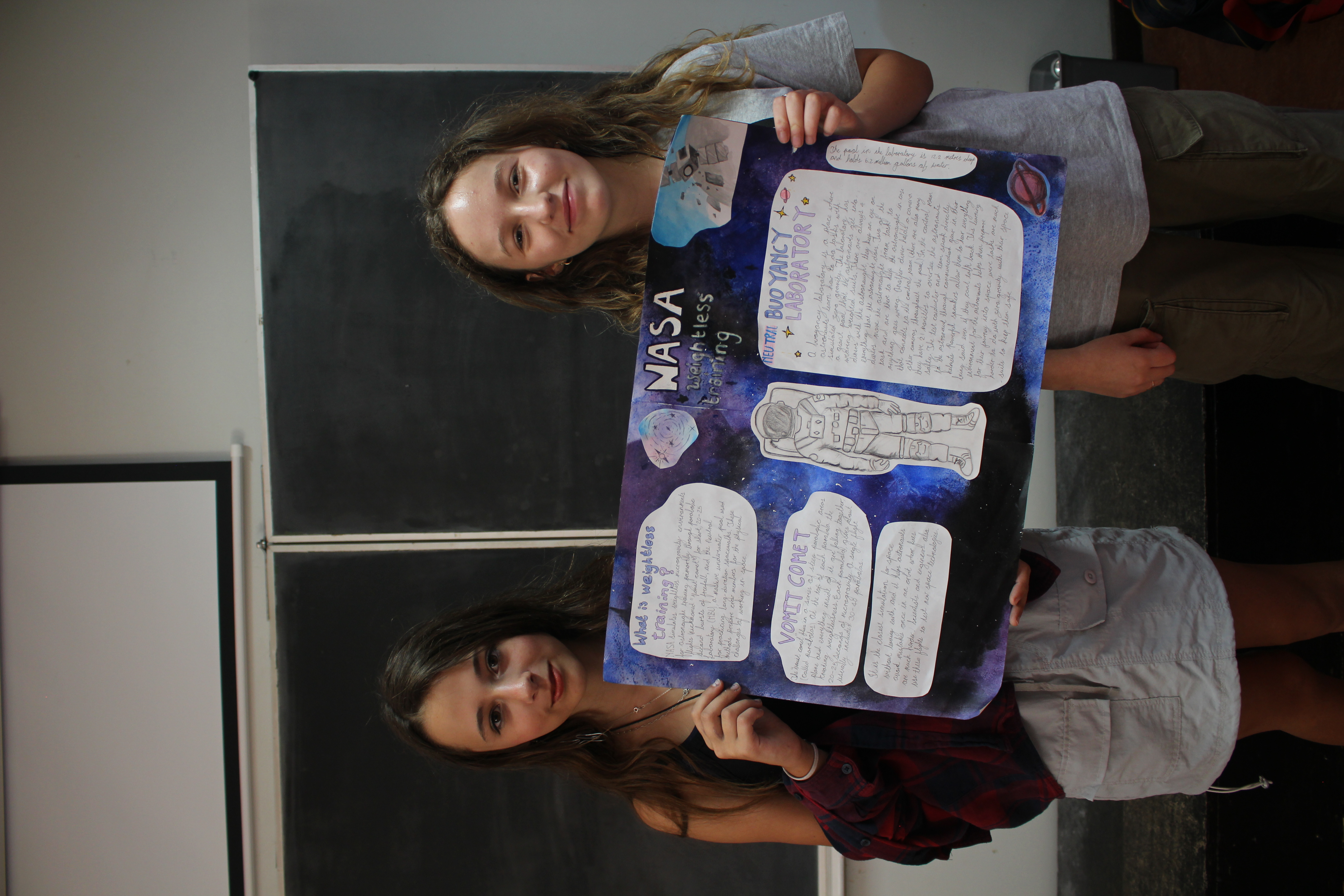
This is a time of turmoil when old values and role models are questioned and often found to be wanting. The student’s emotions roar the extremes of love and hate, anger and lethargy, and they often feel powerless to control them. Through this chaos comes a strong sense of identity. It is a challenging time for all. However, there is an emotional freshness and directness which is enjoyed by all who teach them.
Now the third seven year cycle is entered – the age of intellectual development. They are no longer satisfied to feel the mood of something, but rather they yearn to understand why it is so and how it is connected to other aspects of their world. There is a strong quest for truth and deep understanding.
The body of a 15 year-old is extremely heavy, and apparently unable to counterbalance the Earth’s gravitational pull. Head, shoulders, hips all strive to be horizontal, whether in a sitting or a standing position. But as this downward movement occurs, there is a balancing upward growth of self. Through puberty and a sexual awakening they experience their bodies in all their individuality for the first time. This is a painful awareness of their physicality in a very emotional way. It is exciting and attractive, yet can quickly lead to feelings of powerlessness against body and emotions: Feelings of ‘my body and my emotions are not myself ’.Teachers work to create a balance between giving expression to these emotions and holding them in check, not allowing these extreme feelings to govern.
The focus of the Grade 9 year is the production of a full length Shakespeare play in which each student is given a main part. The Curriculum is designed to mirror the experiences of the 15 year-old. It feeds the striving for truth, deep understanding, and self-knowledge, often by studying opposite processes and connecting them with the whole. The whole represents the balanced self. For example: in Chemistry, the opposite chemical reactions of respiration and combustion which support all life on Earth are used as a gateway to study organic chemistry – the cycle of carbon in living matter from sugar through alcohol, organic acids and finally ether and esters. In Geography, the movement of the tectonic plates is studied: plate convergence and separation, how this shapes the Earth and the force that drives it. In History, they learn about the French Revolution, from the seeds of social unrest to the full expression of the revolting masses, and the impact this had on social order across Europe. This marvellously mirrors their own personal revolution. Throughout the curriculum there is an emphasis on biographies, the personal life stories of the men and women who shaped the world. This connects with the 15 year-old’s own sense of personal destiny.
English: Classics with a focus on Shakespeare, including the production of a Shakespeare play. Continuation of grammar. Literary aspects of Romanticism, Rationalism and Sentimentalism. Humour, presentations and declamation.
Mathematics: Special products and factorising; more complex first degree equations and problem solving; irrational numbers; scientific notation; consolidation of Class 8 algebra; the Cartesian coordinate system; an introduction to the concept of infinity; projective generation of forms; duality; conic sections (circle, ellipse, parabola and hyperbola) in relation to infinity; properties of quadrilaterals; parallel lines; and congruency of triangles leading to formal geometry.
History: The history of nationalism; the French and American Revolutions; biographies of significant historical figures in context; and nationalism in South Africa.
Geography: Geology and geomorphology; the tectonic and denudational forces that shape the Earth; and economic relations within Africa.
Physics: Electricity and magnetism.
Chemistry: Organic chemistry.
Biology: The anatomy and physiology of blood circulation and respiration.
Second and Third Languages: Revision of grammar; study of set works; recitation; and the development of idiomatic language.
Arts: History: Comparisons between Greek and Roman art, the Northern and Southern Renaissance, and the fathers of modern art. Practical: Black and white drawing, introductory free form colour composition, clay modelling, concave and convex forms, eurythmy, singing and music.
Technology: Woodwork: More advanced constructions. Metalwork: Iron forging. Basket weaving: More advanced constructions.
Grade 9 can be a roller-coaster ride of emotions – ups and downs, acceptances and rejections etc. Pushing against authority is part of the new-self struggle. The following 10 points may help:
written by Graham Scannell
Michael Oak, in true Waldorf tradition, offers a rich treasure trove of plays. Parents in Grade 2 watch the fledgling performances of animal stories from Aesop’s fables. In Grade 3, they see Joseph and his multi-coloured coat; in Grade 4, Thor and his hammer; in Grade 5, the adventures of Gilgamesh, and so on. All of these plays bring the main lesson stories to life in the imagination. There is no high-powered role-play here but rather the accent is on the speech – often alliterative choral verse- speaking.
The structure of the plays becomes more emphasised in Grade 6 and then, in Grade 7, as part of the finale in primary school, there is a more challenging performance – sometimes even a high-calibre musical like Oliver Twist or The Magic Flute.
In the high school, drama continues to be concerned with the working of the imagination, but there is now a real emphasis on the discipline of craftsmanship. Here theatre provides the medium to develop skills and discipline in an art form that will assist in the communication of one’s ideas and experiences to others, as well as the self-confidence this brings.
In Grade 9, Michael Oak has a long tradition of highly skilled and entertaining full-scale Shakespeare productions. In Grade 10 the students study and perform a Greek Tragedy which is completely different from the Shakespeare Play. The students in Class 12 present their own highly competent productions of modern plays. Drama is also a subject option for matric and is studied from Grade 11.
Theatre is the most visible and structured form of drama, but let us not forget there is also much educational drama that takes place in the classrooms without a special audience and which does not necessarily involve teaching children how to act. It is concerned with opportunities for invention and expression where what has been imparted factually can be brought to life through movement and speech in order to enliven and enhance the personal experience of different phenomena and subjects.
But back to the stage… and Michael Oak’s Shakespeare plays. Over the years there have been one-off productions of ‘serious’ plays such as Cymbeline, Macbeth, A Winter’s Tale; but it is the romantic comedies that keep coming back. Two terms of rehearsal and a natural bent for fun have ensured that these are the Grade 9 favourites: A Midsummer Night’s Dream, Twelfth Night, As You Like It, The Comedy of Errors, The Tempest and The Two Gentlemen of Verona.
And always, there are the enthralled front rows of children who, as they raise through the class levels, not only have Shakespeare as a second language, but who, themselves, can hardly wait to get to Grade 9 to perform a play themselves! Perhaps they sense the central role it plays in the lives and experience of the Grade 9 students. Certainly, year after year, one sees how the drama experience assists the 14/15-year- olds with moving into a new and expanded sense of self. Like other non-exam oriented activities in the multi-textured richness of a Waldorf education, the Shakespeare play may not contribute directly to high exam marks (though this is debatable), but it is clear that the real richness and reward is a permanent inner one – which has to do with the growth and expansion of the students’ human-beingness.
15 to 16 years old

In this phase the young person enters a pool of relative calm after the rapids and white waters of Grade 9. There is a marked change and a much clearer ability to see things in perspective, to recognise the grey areas and appreciate the differences. Balance becomes the undertone for this year. This new maturity brings a deeper thinking capacity and the tension between opposites so strongly felt in the previous phase gives way to a sense for process and transformation over time. Comparative and process thinking – i.e. how one thing relates to the other, how parts work together in the context of the whole, how forms develop, and how substance is transformed – underlie the subjects of Grade 10.
Physically, the 16-year-old is experiencing a consolidation, and emotionally the young person is much more at peace with the physiological changes that have recently flooded in. Emotionally they are more adjusted and balanced in their responses. Existential questions become more pressing as they move away from the unavoidable. Earlier self-absorption and the question of truth which is the undertone for the High School years becomes a deeper issue.
The Curriculum covers topics that the more mature student can appreciate. With the new objectivity, we can return to deep themes covered in the Primary School. For instance, we go back to the Ancient cultures in Grade 10, where a much deeper understanding and appreciation is now possible. The journey travelled can now be viewed from a high vantage point.
In literature The Odyssey by Homer stands as a literary monument at the beginning of Western civilisation. The epic throws light on Greek consciousness while simultaneously revealing how relevant it can still be for a modern person.
In light of the underlying theme of balance, Chemistry studies acids and bases and salts. That such volatile and caustic concentrated opposites are transformed in uniting to neutral salt as a precipitate is a wonder and can now be understood with clearer concepts. Similarly, the Fine Arts, including Eurythmy, reverberate with experiences of balance.
The Grade 10 Geometry block focuses on Conic sections. The conic section curves are first discovered as loci of fixed distances and drawn as curves of addition and subtraction. Then, these same curves are discovered within cuts of the cone. The introduction of the parabola is followed by a discussion of René Descartes and his methods. The students are then introduced to the Cartesian coordinate plane including the equations for lines, parabolas, circles and ellipses. Trigonometry covers the basic trigonometric relationships of sine, cosine and tangent. Both theoretical and practical triangle problems are studied, with a significant portion of the class devoted to applied trigonometry – field work where the students, using theodolites, complete a survey and create a map.
Our study of human physiology focuses on the three principle systems arising from the polarities in the human body with the mediating, balancing rhythmic system of the breath and circulation in the middle. These studies begin with an overview of the reproductive system and embryology.
Grade 10 Physics is the study of mechanics. We explore the world of classical mechanics as revealed by Galileo and Newton. This must all be connected with the human being – our personal experience of motion and action.
History goes back to prehistoric events and the story of humanity’s gradual learning of technical skills and of the relationship to the land. Developments in technology, culture, religion and government are studied through shifts in human consciousness, beginning with the hunter-gatherer and moving on to the birth of agriculture. We explore the early river valley civilisation of Egypt, the later Nile civilisations and the Iron Age cultures in Africa.
The Economic and Management Sciences activities take on a very practical form with job shadowing arranged with local businesses. In addition the Grade 10s have to raise money for the Orange River camp, giving wonderful opportunities for entrepreneurial initiative.
The morning begins with a buzz. There are casual greetings as I approach the clusters of animated discussion. Much has happened since we last saw each other and there is a lot to catch up on!
I like to begin most Main Lessons with some singing. For fifteen or twenty minutes we sing old favourites as one voice, accompanied by the guitar – a wonderful exercise for this age group. Singing is an activity that awakens us – ready to go into the Main Lesson itself.
I look into the world,
Wherein there shines the sun,
Wherein there gleam the stars,
Wherein there lie the stones.
The plants with life unfold,
The animals with feeling live
And the human being ensouled
Offers a dwelling to the spirit.
I look into the soul that living dwells in me
God’s spirit lives and weaves,
In sunlight and in soul light To Thee O spirit of God.
I seeking turn myself
That the strength and grace I need
For learning and for work
Within me may live and grow.
The strong iambic rhythm in the morning High School verse is the rhythm for action.
English: Classic sagas and epics. Medieval lyrics. The Renaissance. Etymology. Poetry and declamation.
Mathematics: Factorising leading to complex algebraic fractions and equations; literal equations; inequalities; simultaneous equations and problem solving; functions including linear, quadratic (parabola), circle and hyperbola; further development of the laws of exponents; permutations and combinations; probability; use of a scientific calculator; formal geometry; trigonometry; and land surveying.
History: Ancient civilisations. Archaeology and the rise of cities. Early African cultures. Developments from nomadic to settled societies.
Geography: Climatology, world pressure systems and the principles of meteorology. The living qualities of the Earth. Sea currents and crustal structure.
Physics: Mechanics and the study of motion.
Chemistry: Inorganic chemistry. Acid base and oxidation reduction reactions.
Biology: The nervous, excretory, endocrine and digestive systems. Exploration of the threefold activity of thinking, feeling and willing.
Second and Third Languages: Further development of language competency.
Arts: History: Explorations of artistic periods from Gothic to Modern Art and the study of aesthetics. Practical: Figure drawing, portraiture, advanced perspective drawing, modelling, exercises in metamorphosis, eurythmy, singing and music.
Technology: Woodwork: Fine joinery. Spinning and weaving, including the production of yarn and basic fabrics. Metalwork: Relief work and copper raising.
Parents can support their child at home by allowing more independence while being really conscious of their friendships and activities. Showing positive interest and involvement with the ‘who, what and when’ in their social life is an expression of parental responsibility and love. You are still the adult in the relationship and must make adult decisions that will not always be popular, but open communication and clear understanding of expectations help build trust and can prevent many frustrations and misunderstandings – write them down if it helps. Realistic affirmation is always far more helpful than anxious counsel. Contributing to the work and welfare of the family is important – creating rhythm and routines within the family and within reasonable boundaries. Doing things together – playing cards, walks, surfing, quality time in outings – all provide important nourishment for everyone involved, but please don’t embarrass them by trying to be a teenager, particularly in front of their peers.
16 to 17 years old
17 to 18 years old
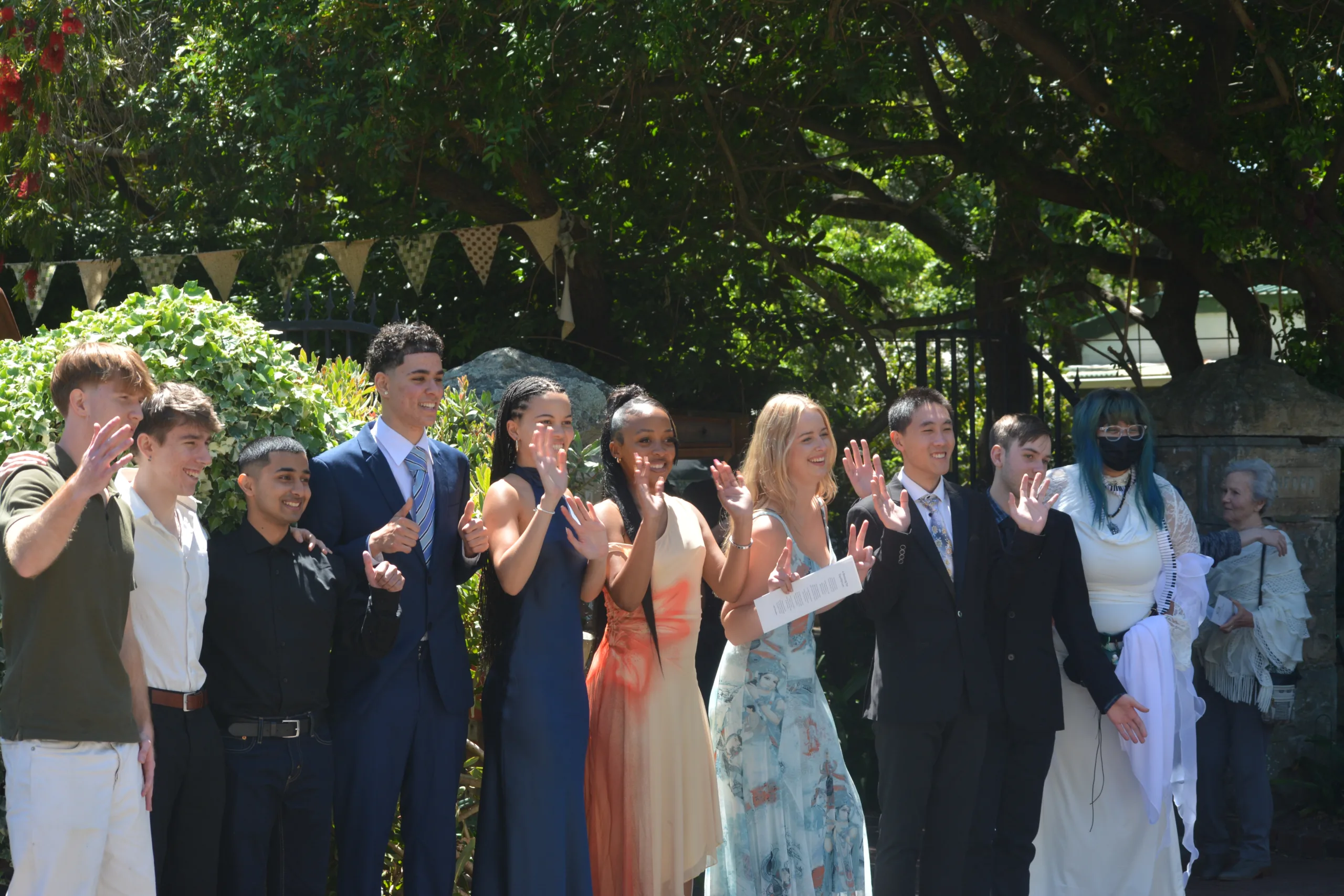
The theme of Grade 12 is synthesis: taking all the parts that we have learned about and seeing how they might come together to make something whole. It is the crowning glory of the Waldorf Curriculum, and at Michael Oak we will offer a full and uncompromised Grade 12. This will culminate in the Grade 12 project presentations at the end of the third term. The fourth term of Class 12 is essentially part of the 13th year: the preparation for matric exams. Thus, choosing subjects only takes place in the fourth term of Grade 12. Before this, all pupils participate in all the subjects in a full Waldorf curriculum.
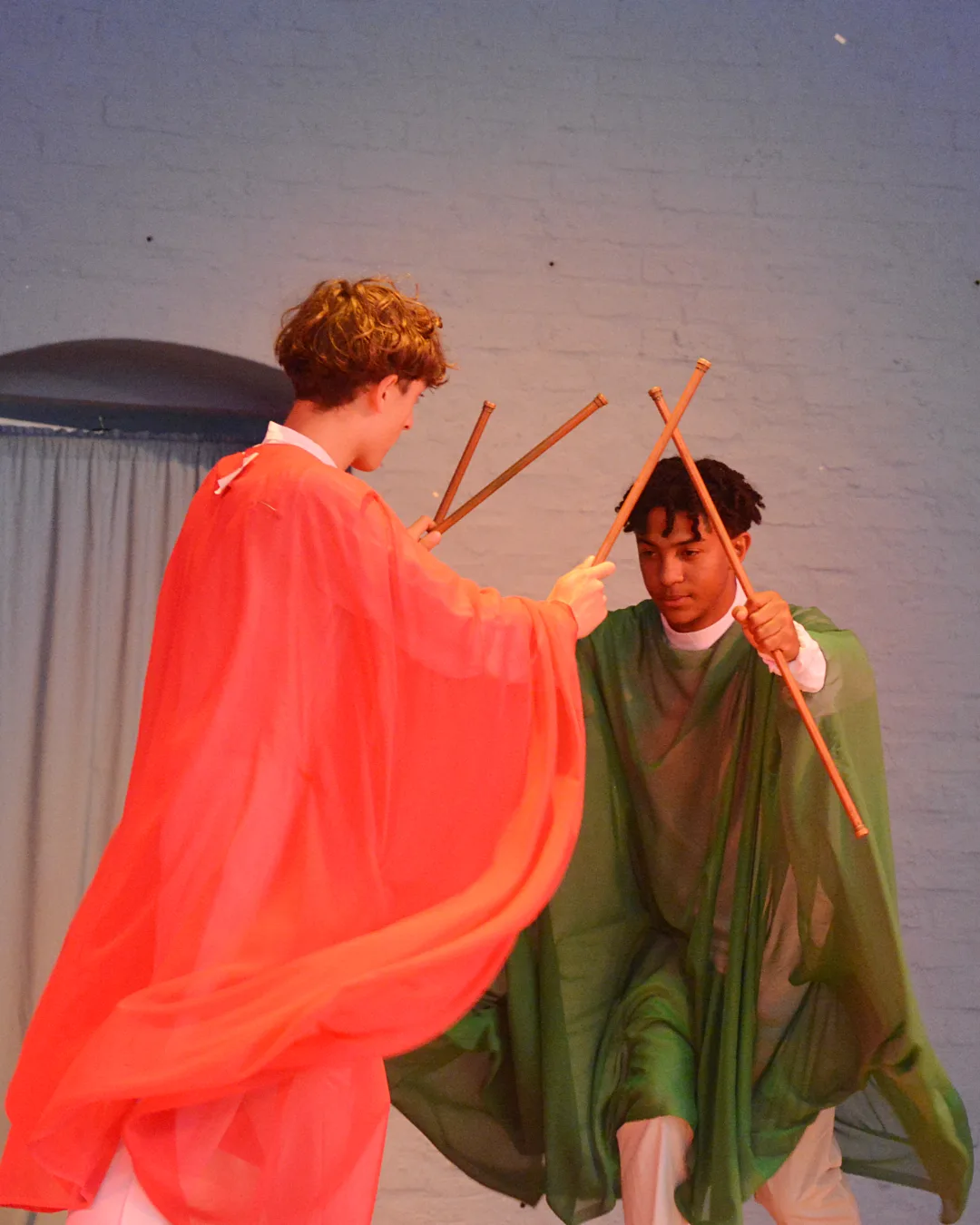
The highlights of the Grade 12 year are the Grade 12 play, and the projects. All pupils participate in the play; there has been no subject specialization at this point. During this process the teacher is an important guiding voice, but the real work of mounting this production is taken on by the students who are usually willing to do whatever it takes to produce a stellar performance. Characters are consciously penetrated with the flowering and newly awakened capacities now at their disposal. The strength gained in facing the audience also helps them to face the future. One of the most triumphant and enriching ways of concluding one’s Waldorf education must undoubtedly be performing a play like this.
In Grade 12 the students take on a project of their own choosing. Although they are mentored and guided, they are expected to carry this project on their own. The bulk of the work is done out of school. They need to be motivated; they need to manage themselves and their time. They are required to keep a journal during this time, and also to present their project to the school and community.
In Grade 12, Main Lessons are run for the first three terms of the year; in the fourth term the matric exam preparation is begun. The following main lessons are studied:
Biology: Genetics and evolutionary theory.
History: Modern world and South African history, including comparative studies of historical developments and events.
Art: History of architecture, including a review of architectural development, organic and functional architecture, building materials and techniques, and the work of notable modern architects.
Chemistry: Continuation of quantitative chemistry and its applications in the modern world, including manufacturing and environmental issues. Further study of atomic theory and emission spectra.
Geography: Economic and social geography, world population challenges, ethnology, and international organisations.
Physics: Acoustics and optics.
Class 12 Plays: Performance and production of the Class 12 plays.
English: Media studies.
Mathematics: The history of mathematics and an introduction to advanced mathematical concepts.
18 to 19 years old
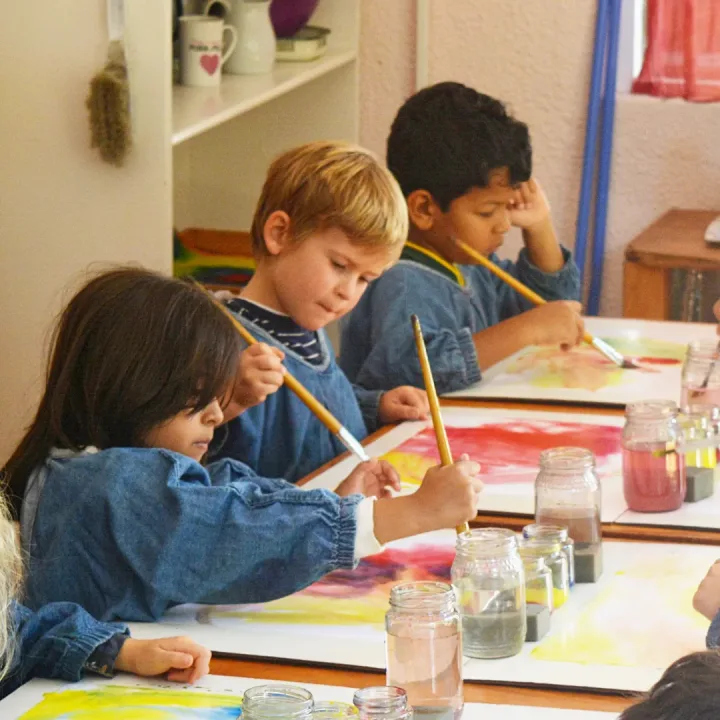
A warm and supportive environment where the magic of childhood is protected. Children are free to learn, play, explore, and discover the world around them. Each child is given the time needed to grow their natural abilities, laying strong foundations for the years ahead.
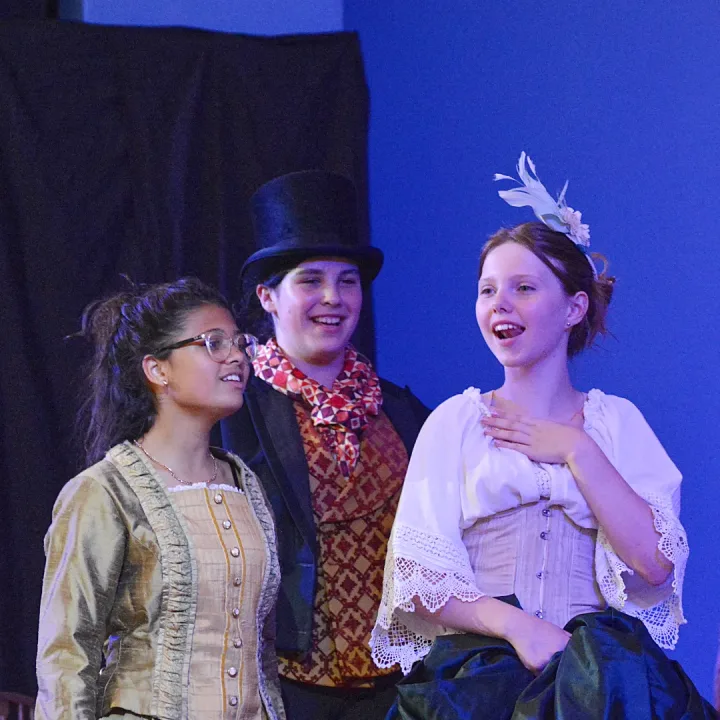
A rich and well-rounded curriculum that blends academic learning with practical and creative experiences. Each stage is thoughtfully shaped to meet the child as they grow, offering learning that aligns with their development. In this way, children are supported with care at every age.
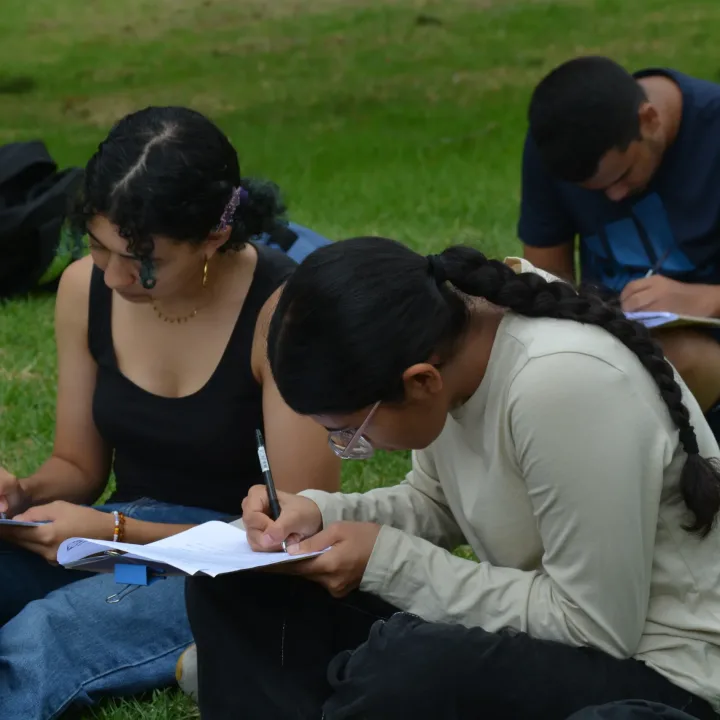
A balanced and grounded curriculum that connects learning to the realities of the modern world. Students are encouraged to think independently and remain adaptable in a changing world. We support young adults by giving them the space to explore who they are and who they are becoming.
“Education is not the filling of a pail, but the lighting of a fire. It is about awakening a love for learning that endures throughout life.”
– William Butler Yeats