
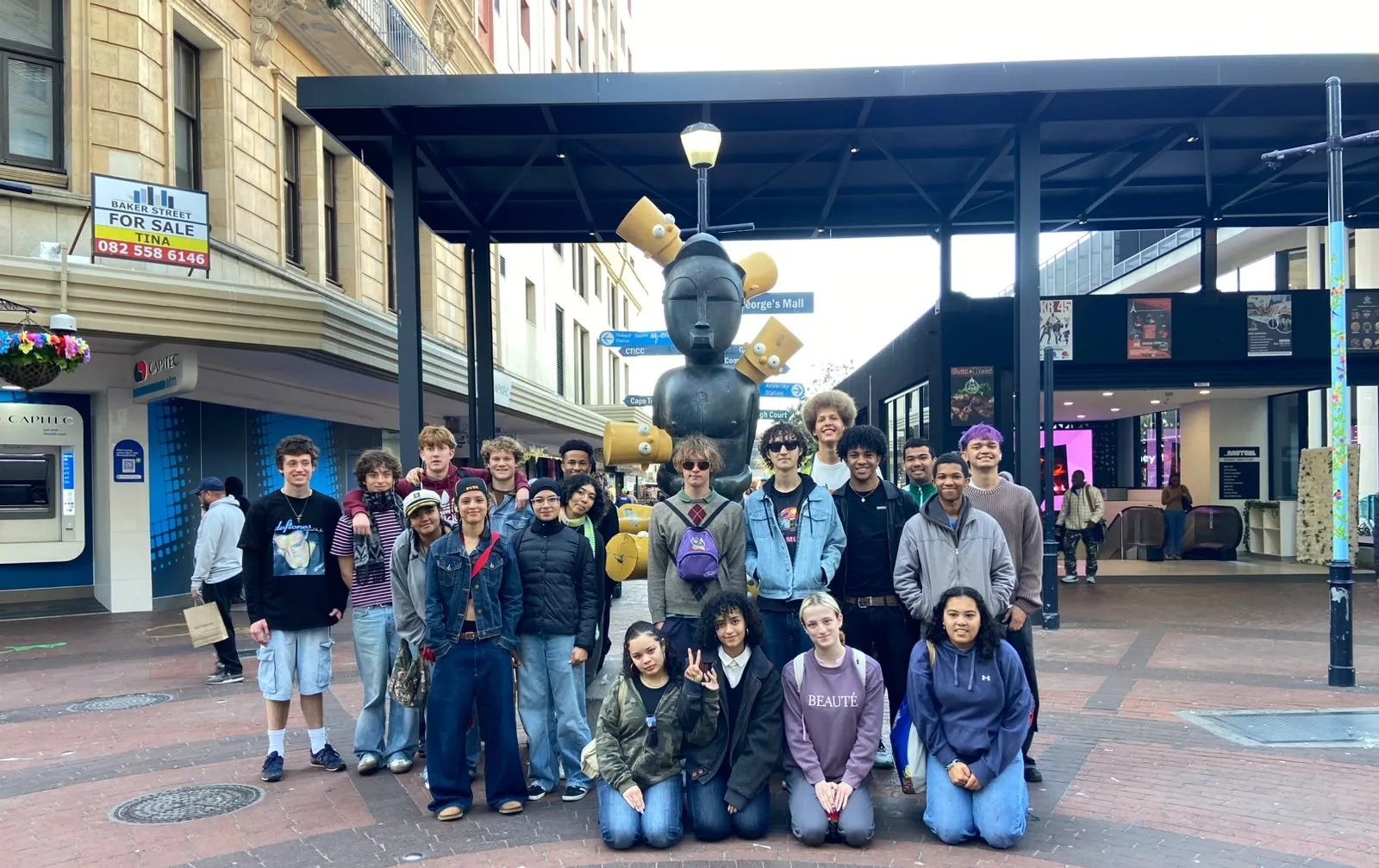
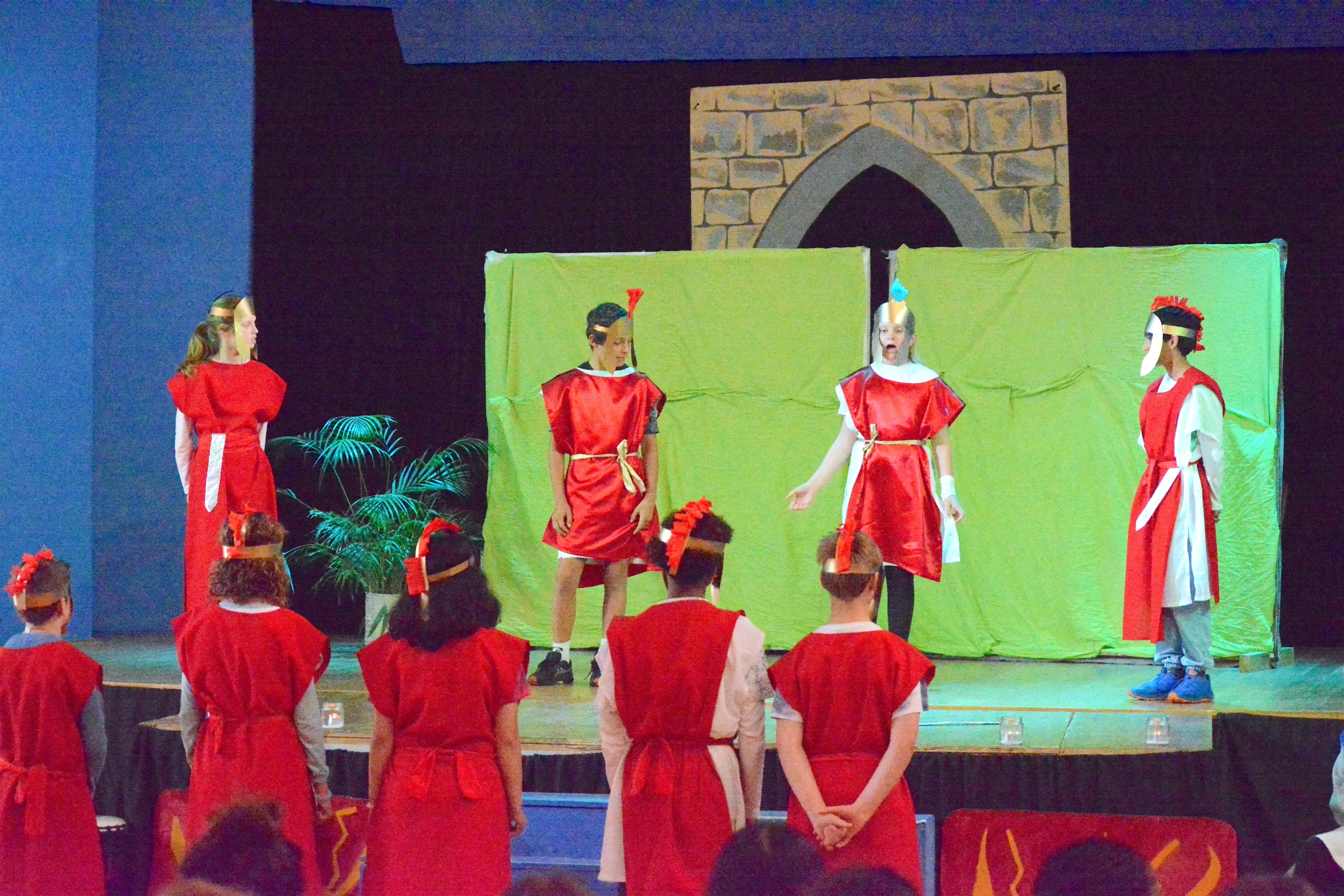
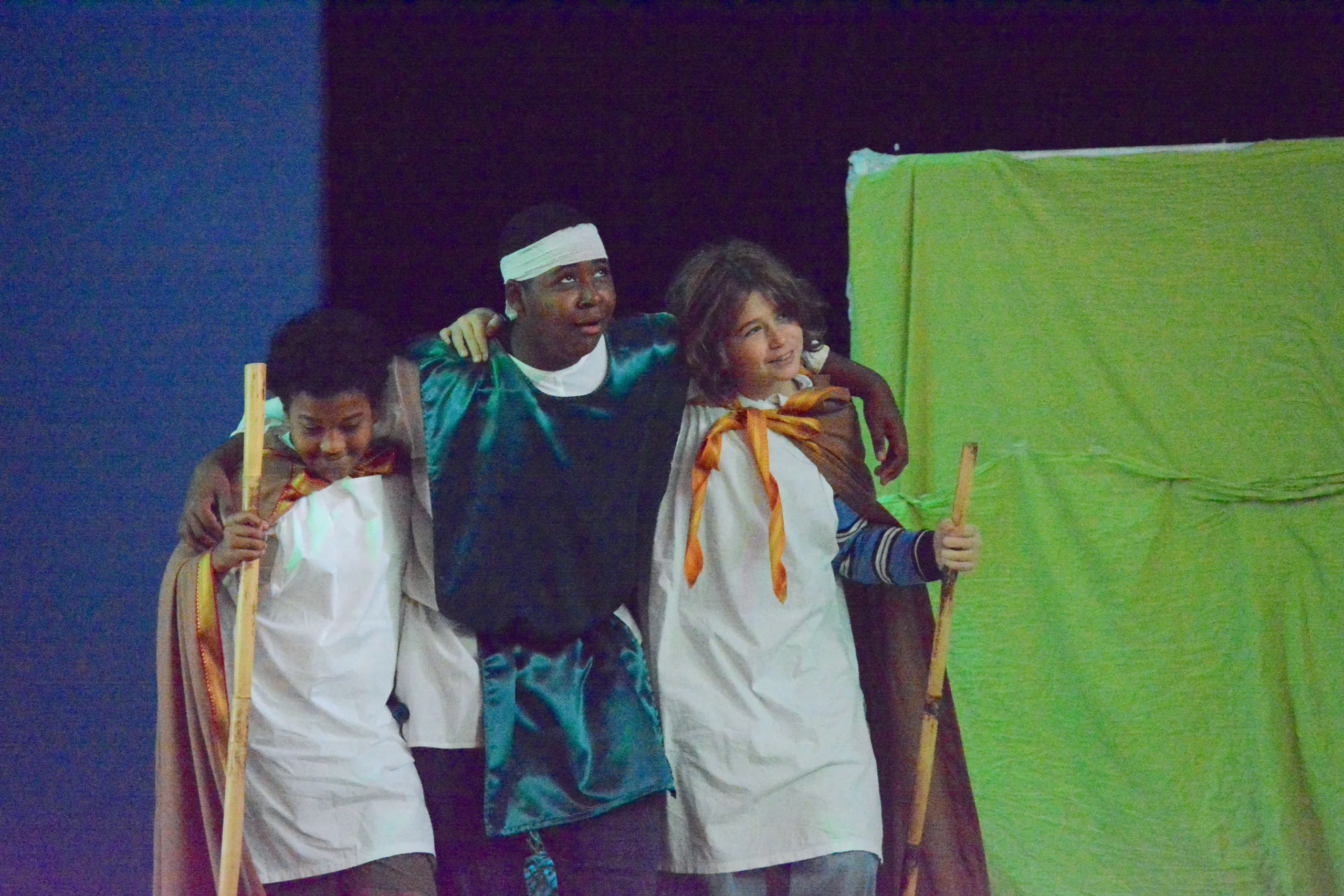
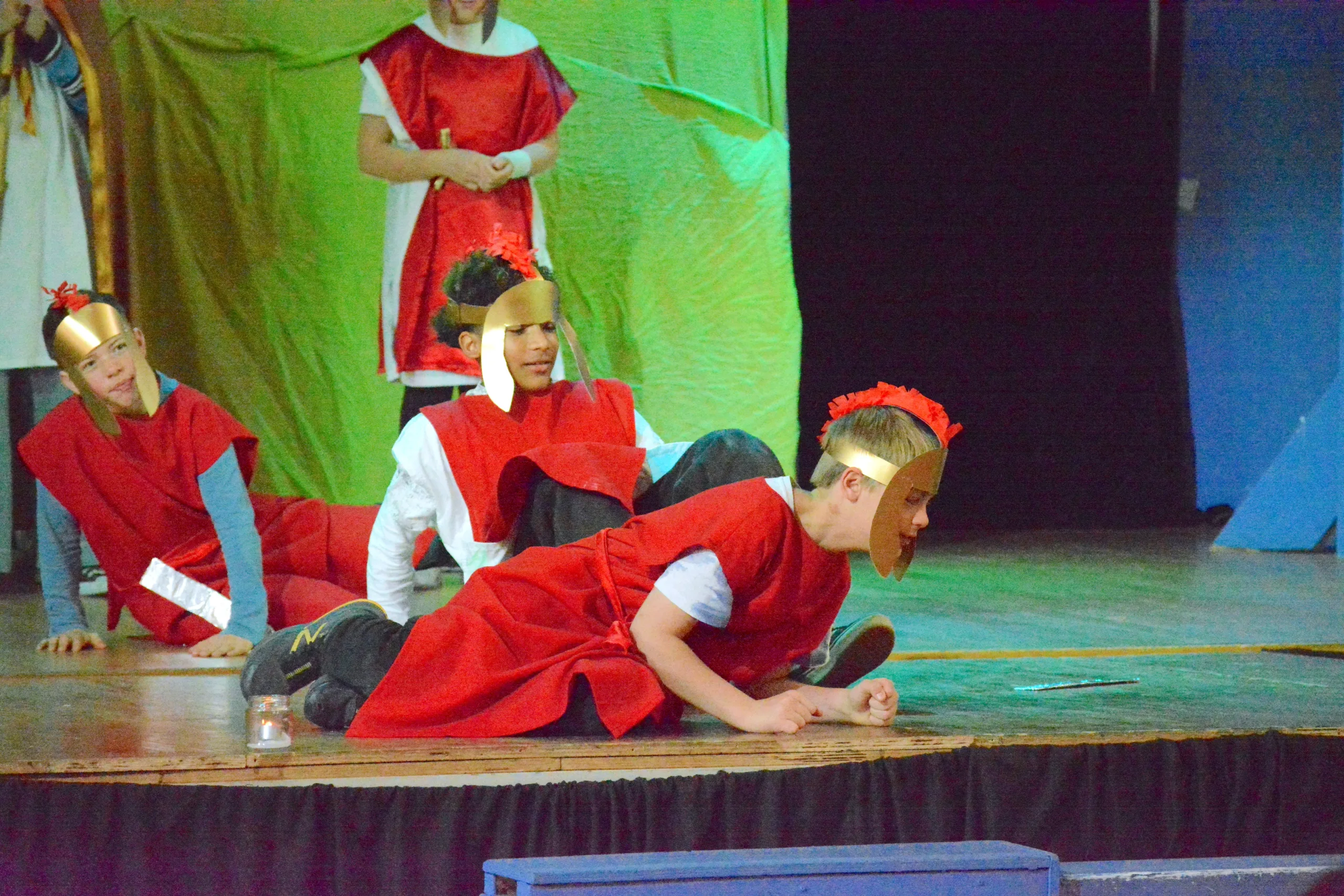
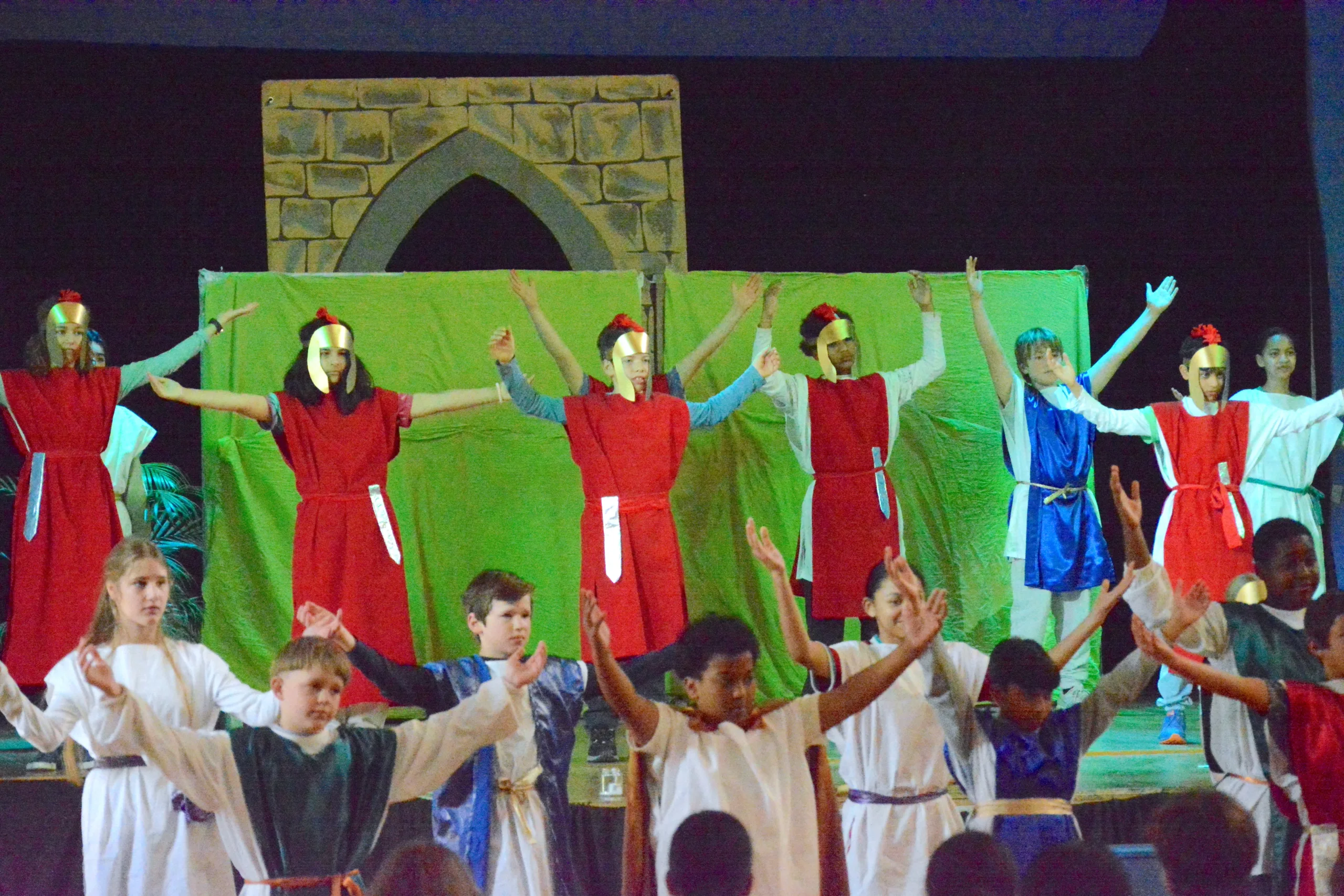
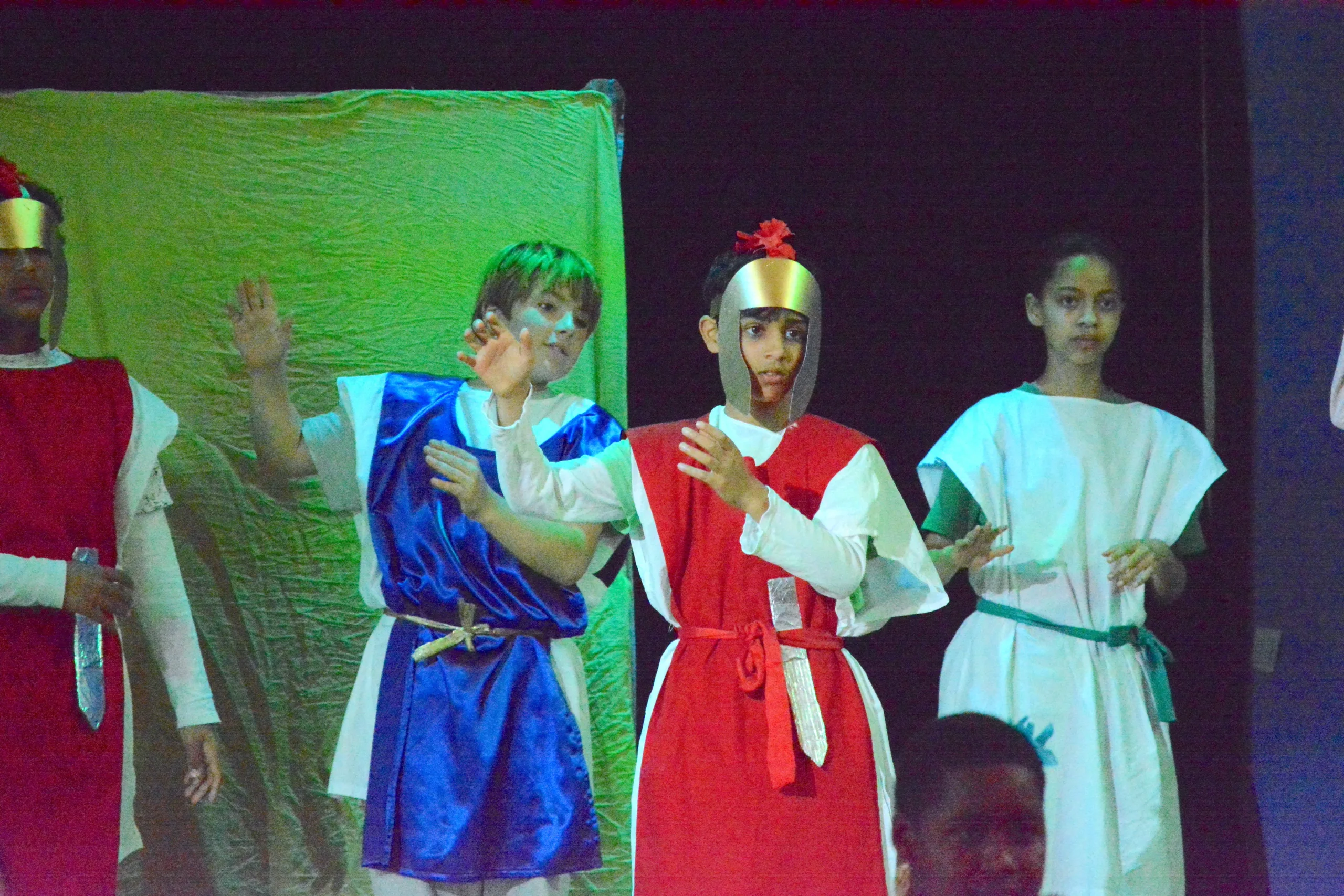
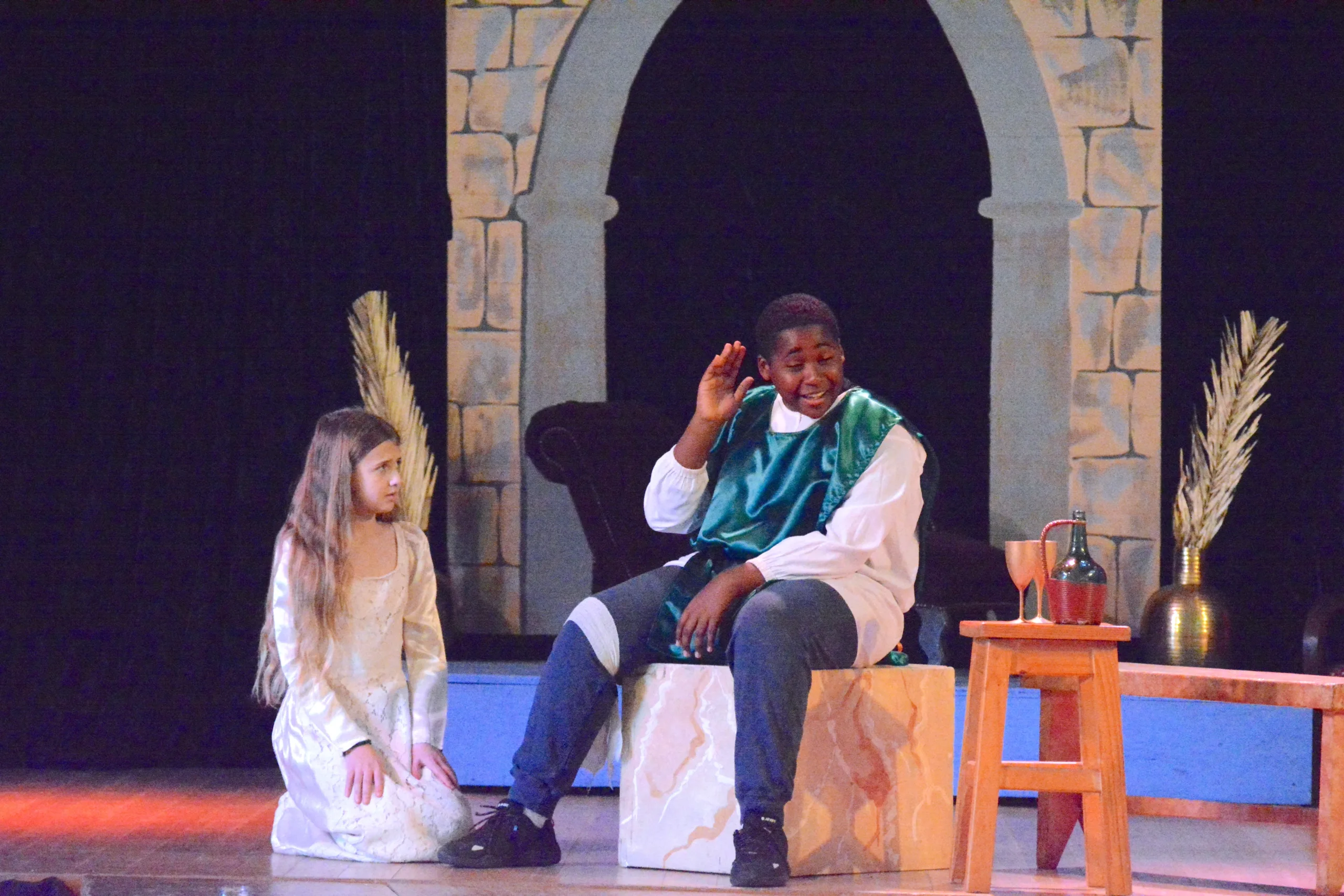

I did not know any of this. All I wanted was to do a production like countless others I had seen at public schools where there was no budget. I wanted the learners to experience South African High School Theatre where the empty stage (with some school furniture) was the set, costumes were sourced in their wardrobes at home, lights and sound were what was already in the hall, and the script was sourced from their beings. The beauty of the production being nothing more than the learners’ collective hearts.
Workshop theatre in South Africa originated in the early 1970s as a collaborative, improvisational form of political and social protest against apartheid.
After reading about the origins of Workshop Theatre in South Africa it was clear to me that any production needed to be relevant to the community. This was the first challenge (all I really wanted was to see the learners have fun on stage). The second was selling the idea to the potential cast. The Class 11s of 2024 told me it would never work. I realised that I would need a hook of some sort…
Poor theatre is a minimalist avant-garde performance style created by Polish theatre director Jerzy Grotowski that strips away lavish set, costumes, and technological effects to focus entirely on the raw connection between the actor and the audience.
Working on an established theatre style was exactly what was needed as inspiration. We set a number of parameters at the start:
- There would be no budget (which meant no set, no colour printing, etc)
- Props and costumes needed to be sourced from the learners’ homes
- Rehearsals would be a total of 3 weeks of main lesson only (no time would be taken from the school day for extra rehearsals)
- The performance had to be 120 minutes long including the break
- Every learner in the class had to have stage time
- The learners needed to take responsibility for everything including the foyer, backstage, the hall and the stage
- The production needed a meaningful message
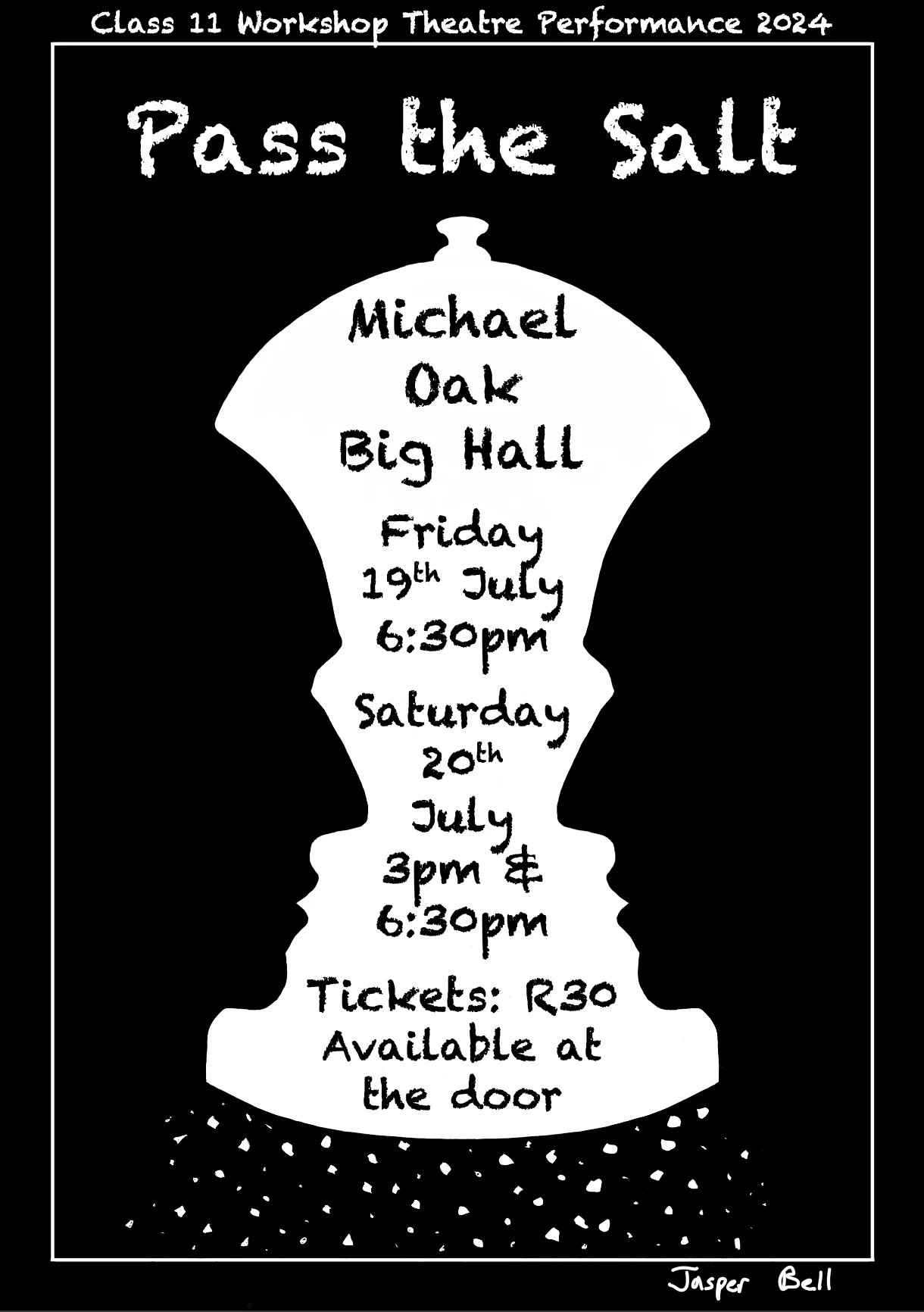
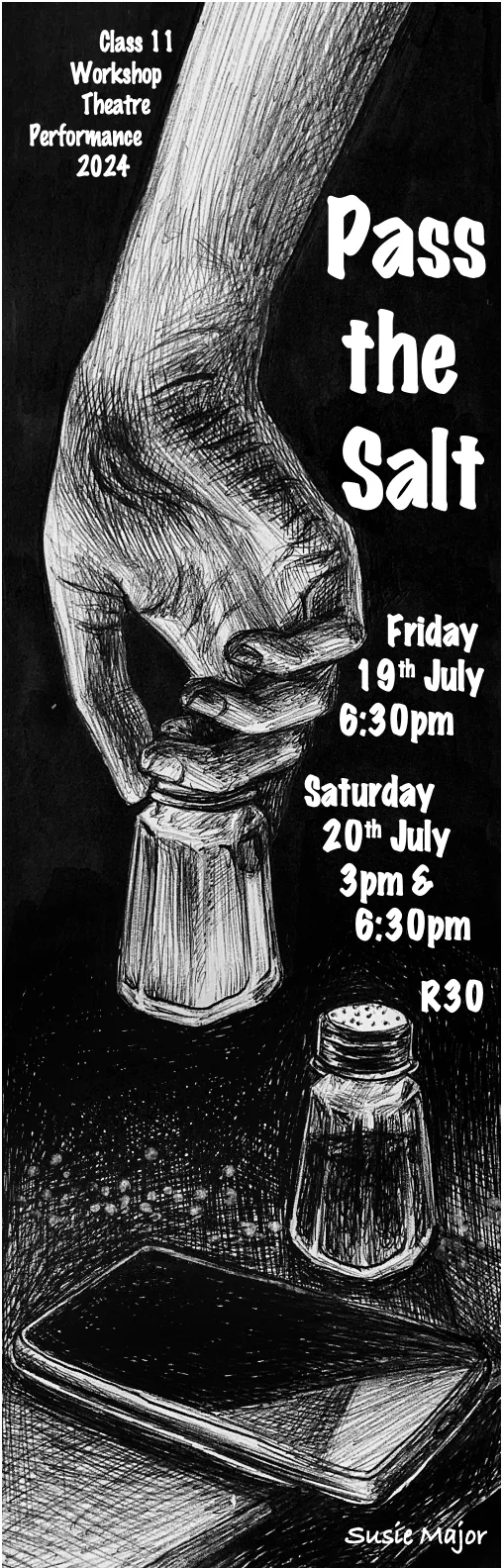
Despite their reservations, the Class 11 group of 2024 created a beautiful and moving piece of theatre they named Pass the Salt. They embraced the daily workshops: four or five groups of learners all working in the hall simultaneously, each group on their own piece. They would be given one hour to work while I would move from group to group. The second hour was for presentation – each group would show their progress and receive direction from the rest of us. New pieces were started after two days.
The class produced a beautiful play. These were some comments:
The Class 11s tackled the impact of the constantly sought distraction of social media content on our families. They gave us a non-stop live action view of what’s up for consumption on social media platforms, all the apps and reels and all peppered with laughs.
Each student flashed their unique talents with instruments, singing, dancing,”kata’ing” ― all the while showcasing their comedy chops. Even our Michael Oak teachers wouldn’t be left out ― whether it was Ms Wille’s hilarious call-to-arms on the Woolies bag pandemic in our pantries, Ms Little as the mind-bending mentalist or Mr Dowling’s Rose from Titanic that can never be unseen. Beautiful concept, amazingly executed and thoroughly entertaining ― please ‘Pass the Salt’!
Shireen Hans (parent)
Thank you to Mr Q and Mr K for introducing this form of theatre to the Class 11s and us!
I was impressed by the genuine involvement of the learners and by what they achieved in such a short period of time. The class chose a very pertinent theme of our times (social media and cell phones) and put up a mirror for themselves and the audience. The picture of the one and only prop ― a long table ― with people sitting at it waiting for nourishment while wrapped up with their phones, is still lingering with me.
Thank you also to the High school teachers who contributed with their own skits!
- Goodall (primary school Music teacher)
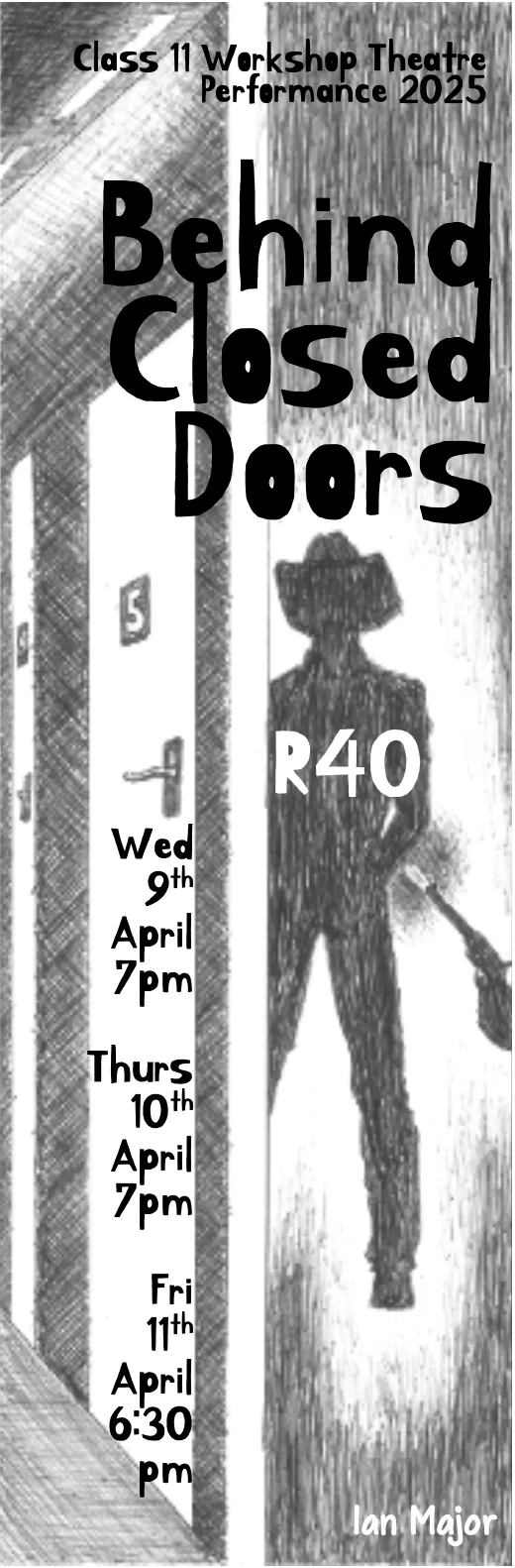
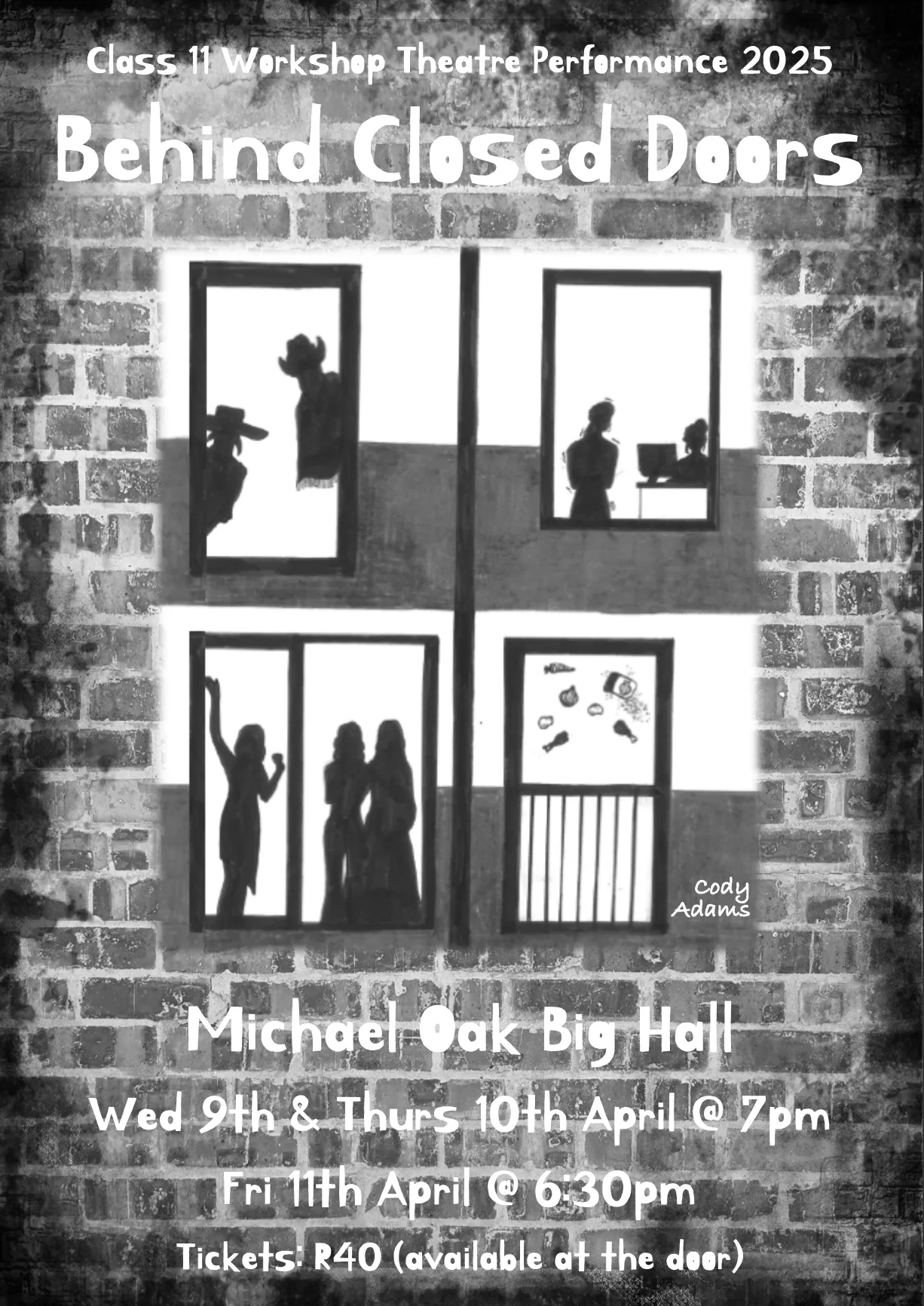
The Class 11s of 2025 followed the same process, but with a very different outcome. They created a thought-provoking piece with many unanswered questions. The piece followed Sam, the superintendent of a big building who seemed perfectly content with their life, until we discovered their secret. I asked audience members what the play was about in the foyer and received different answers from everyone I asked. Objective achieved.
It is imperative that the Class 11s present something that is relevant, thought-provoking or disturbing. South African workshop theatre was part of the protest theatre movement and pieces were created not only to entertain, but to make the audiences think, to question, to feel uneasy, to change.
The Class 11s of 2026 have started workshopping ideas for their production in December. It is such a privilege to be part of this process, to witness free thought and to help share these thoughts with a wider audience. I do not want to reveal too much, but would like to say that our workshop piece this year might lean towards a different sub-genre.
But is it theatre?
When our children are given the opportunity to share their thoughts, their fears, their insecurity, their anxiety, their hopes and their dreams in a safe space. When their heart stories move us, disturb us, cause us to question, I do not care what anybody calls it. What I care about is hearing their voices ringing true.
There are no mistakes, just lessons to be learned.