Even back then, it became clear to me that when children are invited to participate in beautifying their surroundings, something remarkable happens. They begin to see themselves as caretakers of their environment. A space that is loved tends to love back in return.
This idea is reflected in what has become known as the Broken Window Theory, first proposed by social scientists James Q. Wilson and George L. Kelling in the 1980s. At its heart is the observation that our surroundings influence our behaviour and our sense of responsibility towards a place. The theory suggests that visible signs of neglect – a broken window left unrepaired, litter left to accumulate, peeling paint or spaces that appear uncared for – can send a subtle message that no one is paying attention and that the environment is not valued. Over time, this can lead to further neglect and a weakening of people’s sense of connection to a space.
While the theory has been debated and criticised when applied to broader social policy, its central insight remains compelling: people are profoundly influenced by the environments they inhabit. A neglected space can foster disengagement, while a cared-for space can inspire care in return.
In schools, this understanding feels particularly relevant. Children are deeply receptive to their surroundings. When they learn in environments that are beautiful, thoughtfully maintained and infused with meaning, they receive a powerful message: you matter, this place matters, and your contribution matters. Beauty becomes more than decoration; it becomes an expression of respect for the people who inhabit the space.
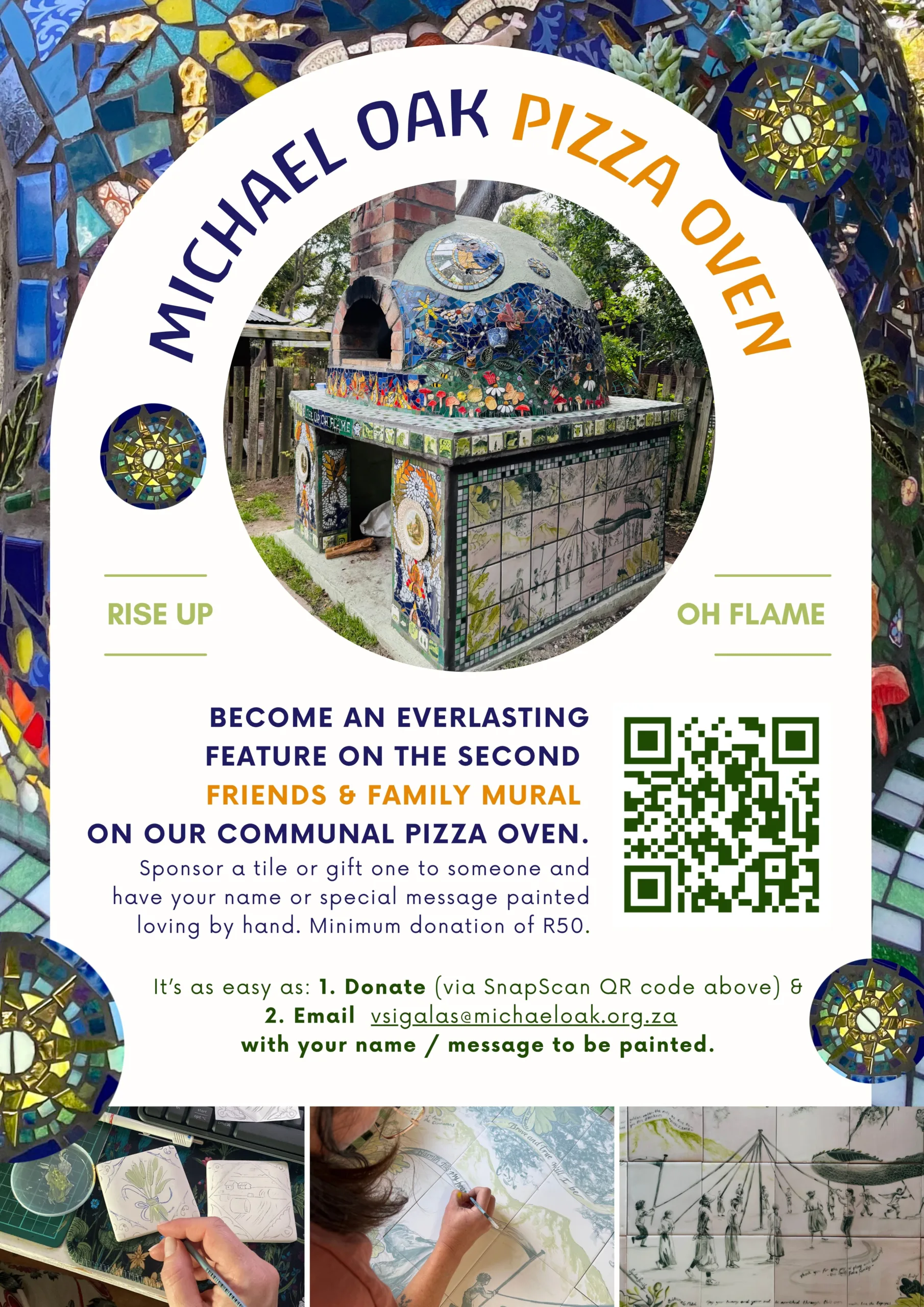
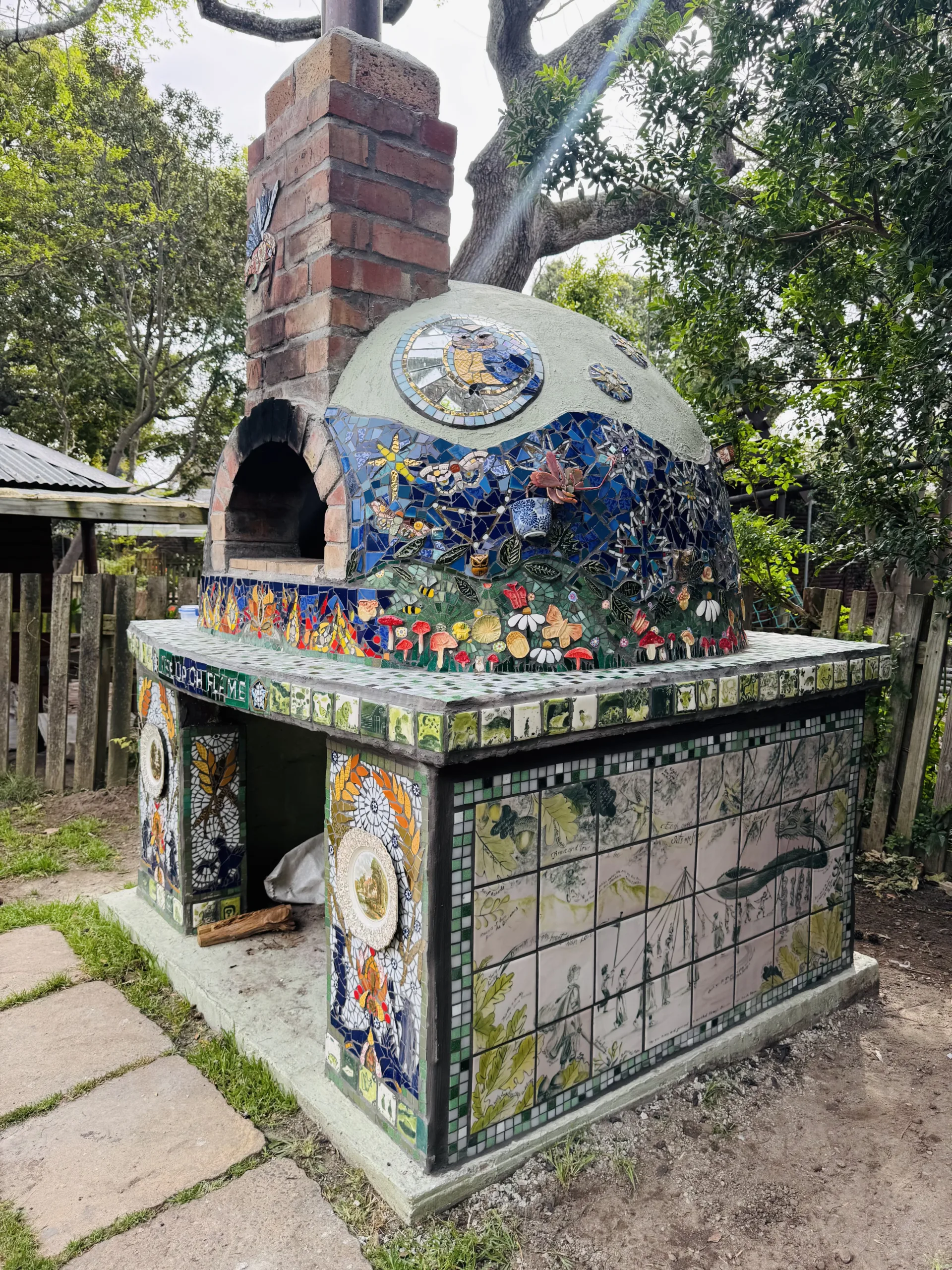
When learners participate in creating murals, mosaics, gardens or building projects, they become co-creators of their environment. They see their ideas reflected in the walls around them, their hands in the tiles embedded in the pizza oven, and their efforts woven into the story of the school. Such experiences nurture a sense of ownership, stewardship and belonging. A beautiful environment does not simply happen to a community – it is continually created and cared for by the community itself.
Perhaps this is the deeper lesson behind the Broken Window Theory. When we repair, create and beautify our shared spaces, we are not only improving the physical environment. We are strengthening the invisible threads of connection that bind people to place and people to one another.
Since arriving at Michael Oak, I have found a community that deeply values the relationship between people, place and beauty. What has touched me most has been witnessing the generosity of spirit that exists within this community. Time and again, I have seen parents, teachers and children come together to build, craft, plant, paint and beautify spaces – not for recognition or reward, but simply because they care. There is something profoundly moving about people offering their time, energy and creativity as an act of service, contributing to a shared vision of a beautiful environment in which our children can grow and flourish.
I have experienced this most strongly within the classes of my own daughters, Athena, in Class 5, and Aria-Luna, in Class 3. Through building projects, working bees, crafting afternoons and countless acts of quiet contribution, I have seen how the creation of beautiful spaces becomes an act of community building. The process itself is as important as the outcome. Relationships are formed, stories are shared, and a sense of belonging emerges through the simple act of working alongside one another.
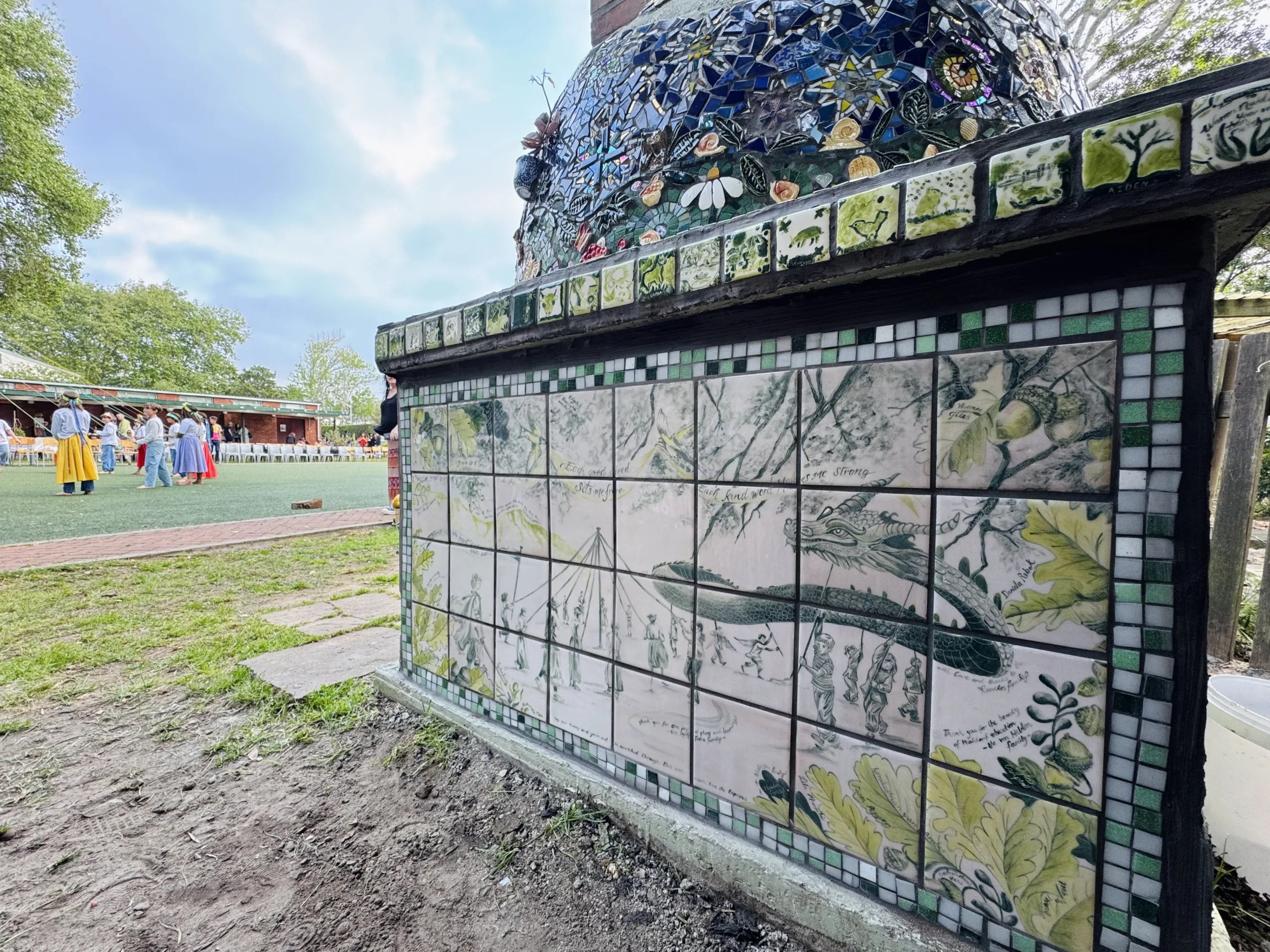
Together with my “partner in creative crime”; Louise van der Westhuizen, and inspired by the Class 3 building project under the guidance of Mrs Blankers, we embarked on the mosaic project surrounding the pizza oven. More recently, we completed the Michaelmas Tile Mural. As with the mosaic, the beauty of the work lies not only in the finished piece but in the process itself. Hands of different ages worked side by side, ideas were shared, and individual contributions found their place within a larger picture. Such projects remind us that community is not something that simply exists; it is something we continually create together.
The pizza oven has become a gathering place – a modern hearth around which community life unfolds. Families gather, stories are shared, friendships are strengthened and nourishment is offered. The mosaic and tile mural surrounding it reflects this spirit. Each piece contributes to a greater whole, much as each member contributes to the life of our school community.
What began as a mosaic project became something much more, bringing many hands and hearts together along the way. It stands as a reminder that when we create beauty together, we are also creating connection, belonging and a sense of home.
These projects are deeply connected to the ancient idea of genius loci – the spirit of place. Every place carries its own unique character, story and atmosphere. Through thoughtful architecture, art and community participation, we can help reveal and strengthen that spirit. When learners help shape the spaces around them, they begin to develop a relationship with the place itself. The school becomes more than a collection of buildings; it becomes a living environment that reflects the people who inhabit it.
Rudolf Steiner spoke of architecture as something that should support and nourish human development. Buildings and spaces, in his view, are not merely functional containers for activity but living environments that influence how we feel, think and relate to one another. Beauty is therefore not an embellishment added at the end; it is an essential aspect of creating places in which human beings can thrive.
This passion for beautifying spaces is, at its heart, a passion for building community through art. Art has the unique ability to bring people together in a shared act of creation. It allows many voices, ideas and hands to contribute to something larger than any one individual could achieve alone.
Louise and I are hooked on this idea of beautifying our school space and we look forward to continuing this journey at Michael Oak through future murals and collaborative art projects. Currently we are already in our planning stages of the next Tile Mural which will tell the story of the Lantern festival. Just like the Michaelmas Tile Mural families’ names and a small message can be added to the painting at a cost of R50. The money all goes back into the costs of the materials used for the project. It’s a beautiful way of becoming part of an artwork that will bring joy for many years to come.
There are also new ideas quietly taking shape, and we hope to become involved in future building projects as opportunities arise, including those emerging from the current Class 4 building project. In this way, we continue the work of nurturing not only beautiful spaces but also the relationships, stories and sense of belonging that make those spaces truly meaningful.
For when we beautify a place, we are doing more than decorating walls or laying tiles. We are weaving care, creativity and community into the fabric of everyday life. We are helping a place tell its story. In doing so, we strengthen the spirit of the place itself, ensuring that future generations of children inherit spaces that speak of beauty, belonging and human connection.
Victoria Sigalis
Art Teacher